

UCA collaborates in research on how global warming is transforming the Northeast Atlantic 4 May 2026
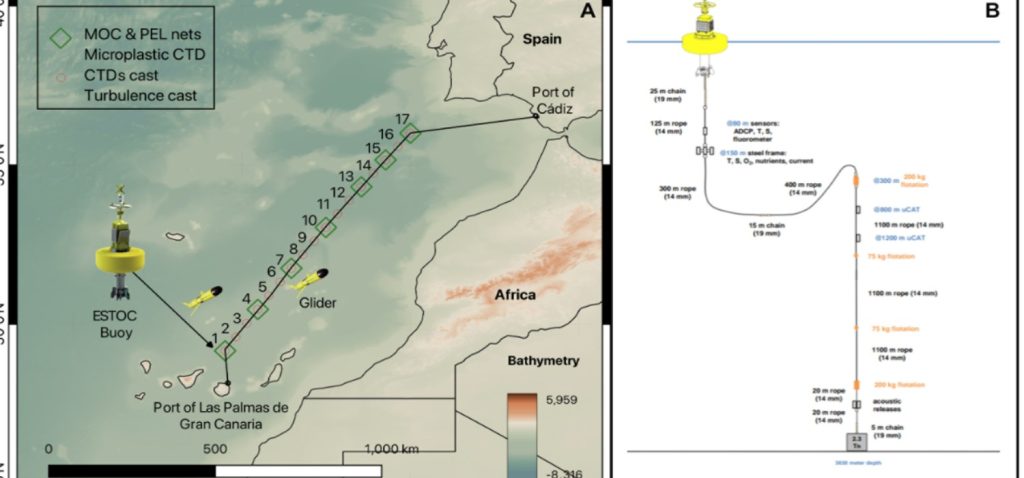
Researchers from the University of Cádiz, through the GYROVAGO project, will analyse changes in physical and dynamical processes and their impact on the ocean’s capacity to absorb CO₂ and on trophic chains.
Researchers from the University of Cádiz, coordinated by Professor Alfredo Izquierdo, are participating in the GYROVAGO research project, an international initiative that will study over the next four years how global warming is affecting vertical structure, mixing processes and circulation in the Northeast Atlantic, as well as its impact on trophic chains and carbon flux dynamics. This research will also include an assessment of microplastic pollution in the area.
The project brings together scientific teams from different disciplines, including physics, chemistry and marine biology, and involves collaboration with national and international institutions such as IEO-CSIC, PLOCAN and the University of Las Palmas de Gran Canaria, as well as research centres from several European countries. In this context, the University of Cádiz contributes its expertise in the physical and dynamical processes that regulate the carbon cycle, marine ecosystems and the distribution of microplastics in the Northeast Atlantic.
It is important to note that the Northeast Atlantic Subtropical Gyre includes several distinctive oceanographic features, such as the Canary–Saharan upwelling system—of great socio-economic importance due to its rich fisheries and highly vulnerable to climate change—as well as the Azores Current, the Strait of Gibraltar with its connection to the Mediterranean Sea, and the Macaronesian volcanic archipelagos, along with numerous isolated and chain-like seamounts rising from great abyssal depths. All these elements play a crucial role in the circulation of the North Atlantic, which is key to regulating the global climate, acting both as a distributor of heat between tropical and polar latitudes and as a CO₂ sink—that is, a system capable of regulating temperature and absorbing part of the carbon dioxide emitted into the atmosphere. However, global warming trends may disrupt this balance and affect both marine ecosystems and the processes that help mitigate climate change.
The GYROVAGO project will address these issues through the analysis of existing data and the collection of new ocean observations. Oceanographic campaigns will be carried out at different times of the year, allowing researchers to study how marine physical drivers vary over time and to better understand their effects on nutrient availability, phytoplankton productivity and the dynamics of organisms forming the base of the trophic chain.
A key element of the project will be the use of the ESTOC ocean station, located north of Gran Canaria, which has a long-standing record of observing physical and biogeochemical ocean variables. This infrastructure provides time series data that help identify long-term changes and distinguish natural variability from those caused by global change.
In addition, the project includes the creation of an open-access data catalogue, which will enable the information generated to be used by the scientific community, public administrations and other stakeholders. This knowledge will contribute to improving environmental management and anticipating potential impacts on biodiversity and sectors such as fisheries, particularly in regions where the ocean plays a strategic role.