

“One of the challenges in Medicine is to combine advances in AI with empathy, active listening and a close, human approach” 13 April 2026
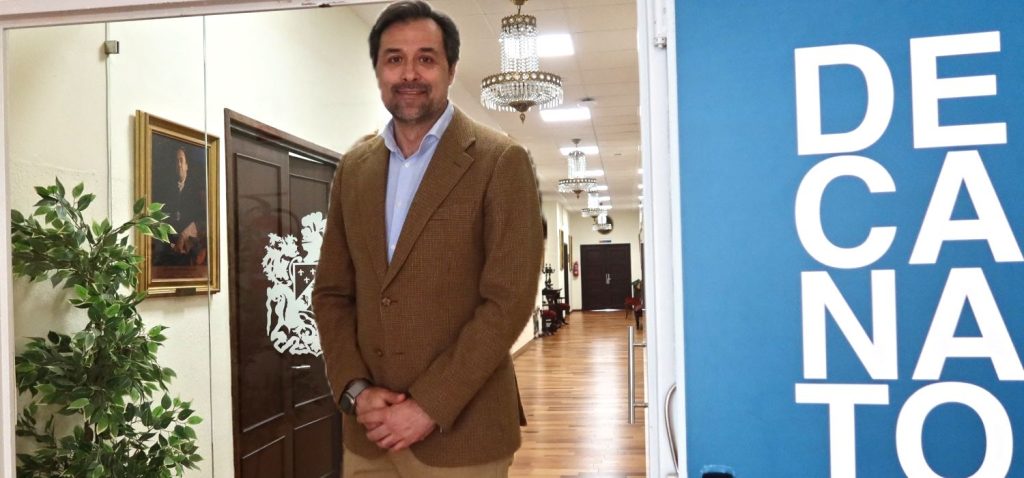
The Dean of Medicine, Manuel Rosety, highlights the recognition that hosting the 89th National Conference of Deans represents for the University of Cádiz
Few disciplines have changed less in their objectives than Medicine. And yet, few have evolved more in how they achieve them. Medical studies are currently at a historic crossroads, where teaching models and the integration of new realities such as climate change and the development of artificial intelligence must be defined. However, as the Dean of the Faculty of Medicine at the University of Cádiz, Manuel Rosety, has pointed out in this interview, the humanistic component —which involves closeness and empathy with patients, as well as care for healthcare professionals— must always remain present. This also includes attention to the mental health and well-being of students, who face one of the most demanding academic programmes each year.
The Faculty of Medicine of the University of Cádiz has hosted this week the 89th National Conference of Deans of Medicine. What does organising this event mean for the UCA?
The selection of the Faculty of Medicine of the University of Cádiz as host of the National Conference of Deans of Medicine is not only a recognition of the trajectory of one of the most emblematic faculties of our University. Above all, it represents an academic responsibility. Hosting this conference has provided strategic support for the University of Cádiz, with the Director General for Professional Regulation and the Regional Minister for Universities, as well as representatives from faculties across the country. The UCA has thus been placed at the centre of decision-making and debate on the future of the Medicine degree.
This forum has also allowed the Faculty of Medicine of the University of Cádiz to showcase its academic progress to other faculties in Spain, including the institutional accreditation of its Quality Assurance System, the International Quality Seal for the Medicine Degree awarded by ANECA, advances in biomedical research linked to the recent accreditation of the Institute of Research and Innovation in Biomedical Sciences of Cádiz (INiBICA), and its clinical simulation facilities. All of this has been made possible thanks to the work of teaching staff, researchers, clinical tutors, technical personnel and students, as well as hospitals and healthcare centres across the province. The meeting has also facilitated collaboration agreements between faculties, promoting the mobility of students and staff at a national level.
“This forum has also enabled the Faculty to showcase its academic progress, such as the institutional accreditation of its Quality Assurance System or the International Quality Seal for the Medicine Degree awarded by ANECA.”
During these sessions, topics such as the integration of climate health into medical studies, improving communication with patients, the development of the ECOE 2026 examination, and potential reforms to access the MIR system have been addressed. What challenges and future directions are being considered for medical education?
Medicine is at an exciting and complex crossroads. Each of these challenges deserves specific analysis. Regarding climate health, we can no longer teach medicine by isolating human beings from their environment. We must adopt the One Health approach in a transversal way, raising awareness among future doctors that the climate crisis has a direct impact on health. This must be integrated into study plans.
On the other hand, technology is a powerful tool, but it must not take away our ability to look and communicate. We understand that Artificial Intelligence is not a threat to humanism, but an ally. We aim to train doctors who use AI to automate mechanical and diagnostic tasks, allowing them to recover time for empathy, active listening and a close, human approach. We have been implementing specific programmes to train verbal and non-verbal communication, empathy, end-of-life support and a comprehensive understanding of patients.
The Objective Structured Clinical Examination (ECOE) is the final exam of the Medicine degree and is logistically enormous. It includes between 10 and 20 simulated clinical cases or stations, involving more than one hundred people, where students must demonstrate skills ranging from suturing a wound or resuscitating a cardiac arrest using a simulator to calming a distressed family member. One of the challenges is to progressively unify criteria at a national level. It is our final guarantee to society that graduates possess not only theoretical knowledge, but also the practical and communicative skills required to practise medicine; in other words, they not only know, but know how to act with skill and ethics.
Finally, it is essential to work together across administrations and institutions on reforming access to the MIR system. Considering the more than 8,000 doctors trained each year, it is important to value not only knowledge, but also aptitudes, attitudes and skills, and to ensure that the healthcare system can offer high-quality specialised training positions. It is also crucial to plan for future medical retirements over the next 10 to 15 years.
The Faculty of Medicine of Cádiz will become part of the Standing Committee of the Conference of Deans. What contributions or lines of work does the University of Cádiz plan to promote within this body?
As members of the Standing Committee of the CNDFM, the Faculty of Medicine of the UCA will be fully committed to contributing wherever needed. However, we would particularly like to address a critical concern shared with other universities: the crisis of clinically affiliated teaching staff. Currently, hospital specialists face such heavy clinical workloads that pursuing an academic career becomes unmanageable. In recent years, ANECA and the CNDFM have worked intensively on this issue, improving accreditation processes. The Regional Government of Andalusia and our University have been pioneers in promoting new types of contracts for affiliated teaching staff, and we now have an opportunity to lead again with the implementation of calls for Assistant Professors with Clinical Affiliation, which will facilitate the start of both academic and clinical careers.
We already have experience, and significant work is being carried out by the Vice-Rectorates for Health Sciences and Academic Staff at the UCA, together with the Faculty of Medicine. Evidence of this can be seen in the various calls for both contracted and civil service positions, although there is still progress to be made. Otherwise, the university model of the Medicine degree could be at risk.
“As members of the Committee, at the UCA we will address the crisis of clinically affiliated teaching staff in Medicine.”
Hosting this event in Cádiz also provides an opportunity to showcase the environment in which academic activity takes place. What added value does the city and the Faculty offer to attract students and external researchers?
Cádiz offers an ecosystem that is a natural attraction, with a very high quality of life that we sometimes take for granted. We have committed to an academic environment where we can offer a close, human and personalised approach that fosters real clinical learning. Our students do not train in a single large hospital but benefit from a comprehensive provincial network, including the University Hospitals of Puerta del Mar, Puerto Real, San Carlos, Jerez, La Línea and Algeciras, as well as Pascual Group hospitals and primary healthcare centres throughout the province, where students discover the core of the healthcare system.
All clinical subjects in the Medicine degree include practical placements in healthcare centres, allowing students to experience a wide range of clinical cases. In fact, the practical training provided by our Faculty is highly valued when graduates begin their residency.
Furthermore, the welcoming environment, climate, light and cultural life of Cádiz represent a significant added value for retaining young talent and attracting external researchers seeking a balance between their scientific careers and personal well-being
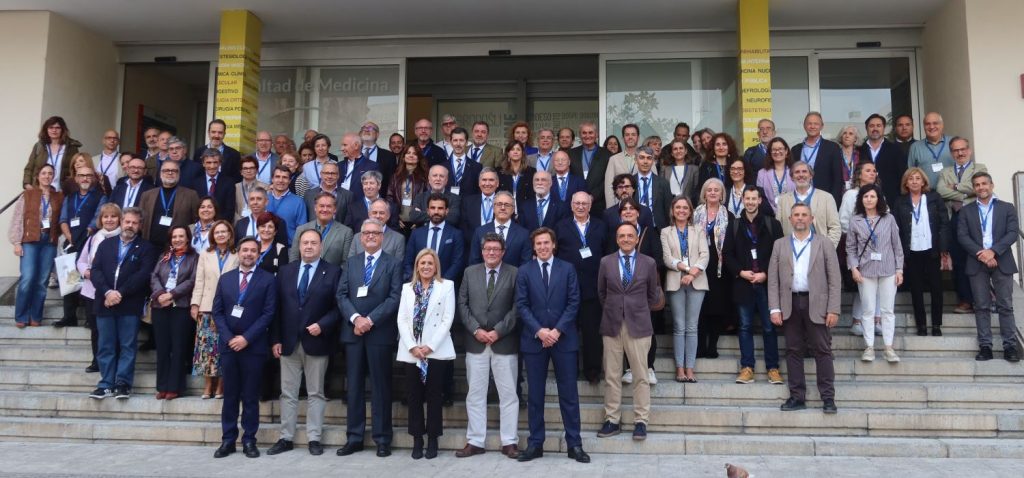
Foto de autoridades y asistentes a la 89º Conferencia de Decanas y Decanos celebrada en Cádiz
What role does the Institute of Research and Innovation in Biomedical Sciences of Cádiz (INiBICA) play in the development of teaching and research activities at the Faculty of Medicine?
To understand the scope of the Faculty, it is essential to recognise that INiBICA is our scientific engine. It is not an isolated entity; it acts as the link between the University of Cádiz, the Andalusian Health Service (SAS), and the business sector. Its role is indispensable, as it closes the loop between the academic classroom, the laboratory bench and the patient’s bedside.
Thanks to INiBICA, early-phase clinical trials and cutting-edge projects in oncology, neuroscience, inflammatory diseases and biomaterials have been developed. For undergraduate students, this means that the lecturer teaching them in the morning is the same researcher publishing in journals such as The Lancet or Nature in the afternoon on new therapies. In addition, INiBICA is one of our main channels for attracting competitive research funding, which translates into better laboratories, more pre- and postdoctoral contracts, and a more dynamic Faculty. Ultimately, this ensures that biomedical innovation directly enhances the quality of our teaching.
“INiBICA is not an isolated entity; it is the link between the University of Cádiz, the Andalusian Health Service and the business sector.”
Medical studies continue to be among the most in-demand programmes. What factors do you attribute this strong interest from students to?
The enduring appeal of Medicine among students can be explained by a combination of powerful factors that have remained stable over time: a vocation for service, employability rates —though not necessarily job quality— prestige, and intellectual challenge. We are facing a generation of students seeking purpose in what they do. They do not want just a job to pay the bills; Medicine offers that daily sense of purpose. Saving a life, relieving chronic pain or supporting a family through a difficult diagnosis are among the most meaningful human experiences.
However, as Dean, I am also aware that these students arrive after years of intense effort to achieve the required entry grades, meaning we receive the strongest academic profiles. They are highly perfectionist students who, once here, face a heavy academic workload and emotional impact, and often neglect their own well-being as they focus on their studies and their patients. For this reason, one of our major challenges is to safeguard their mental health, to review academic workloads and to address the pressure of the system on these talented young people from the moment they enter the Faculty. They are the future of our healthcare system.