
University of Cádiz Library Service: A Giant of Paper and Bits 7 November 2025
In addition to safeguarding a treasure like its Bibliographic Collection and offering specialized training, this branch of the University of Cádiz is responsible for organizing and cataloguing the vast academic output of its community.
The university—particularly the University of Cádiz—embodies like no other the blend of tradition and innovation: from the study of the dactylic hexameters of the Aeneid to the identification of amino acids in a single drop of seawater. Within this constant interplay of memory and progress, the libraries of the University of Cádiz stand both as cause and effect. They are the cause, because they house the manuals and references essential for knowledge to advance—regardless of the direction it takes. And they are the effect, because alongside the traditional silent reading rooms and books filled with the scent of time, these libraries have become modern spaces equipped for collaborative work, internet access, and continuous training in bibliographic methods.
Ensuring this intricate machinery of history and innovation works seamlessly is a team of 76 members from the University’s technical, administrative, and support staff (PTGAS), of whom 68 work directly within the Library Service.
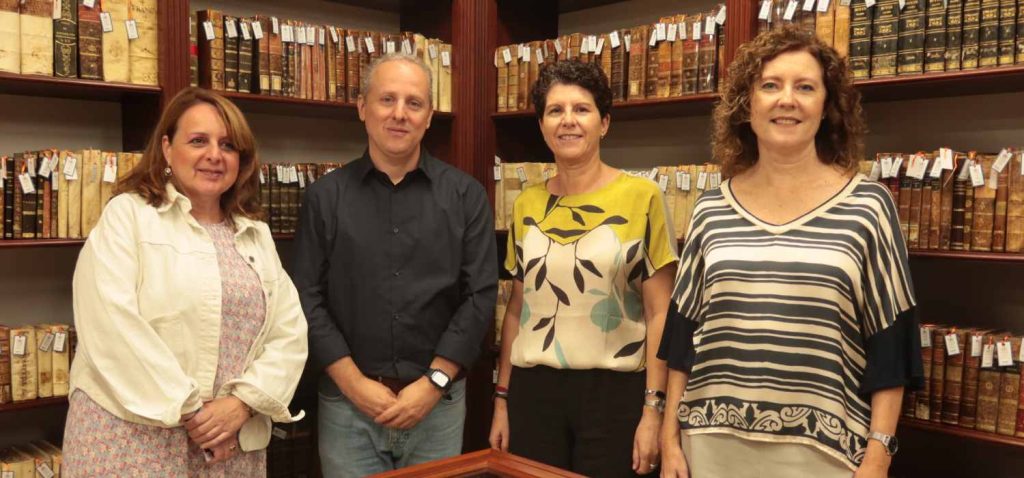
In this interview, Jesús Fernández (Director of the Library, Archives and Publications Area), Leonor Fernández (Head of the Technical Processing and Technological Management Section), Carmen Franco (Head of the Research Support and Services Section), and Lourdes Rosado (Head of the Collections and Heritage Section) open the doors of the Library to explain how these spaces have adapted to the demands of today’s knowledge society.
The Library is one of the University of Cádiz’s best-known services. What is its structure?
Jesús Fernández (J.F.): The Library Service is structured into four campus libraries, which together comprise nine service points. In addition, there is a Central Library Service consisting of three coordinating sections and an administration section.
Who makes up this team and what are each person’s specific responsibilities?
J.F.: The campus library heads are responsible for organizing and coordinating the libraries on their respective campuses, managing assigned staff, and ensuring services are delivered efficiently and with quality.
Carmen Franco (C.F.): My section—Research Support and Services—provides services to teaching and research staff to support their academic activity. We are also responsible for disseminating and evaluating the university’s scientific output. This section coordinates user training activities across all campus libraries, handles specialized research enquiries from users, and manages the interlibrary loan service. These services are open to the entire UCA community. Additionally, we coordinate and implement the Training Plan for the staff of the Library, Archives and Publications Area.
Leonor Fernández (L.F.): The Technical Processing and Technological Management Section is primarily responsible for implementing, coordinating, and improving library services, tools, and technologies. This includes the Koha Integrated Library System (ILS), the library’s website, the unified search engine for library content, seat reservation and occupancy tracking apps, access to electronic resources, and the virtual exhibitions portal. All of this aims to support learning, teaching, and research across the university, while also improving the working conditions for library staff. This section also manages the cataloguing of both print and electronic resources to ensure availability. Additionally, we maintain the Library’s Quality Management System by keeping documentation and procedures up to date, reviewing strategic elements, and evaluating user satisfaction and workplace climate. We analyse performance indicators and collect data to measure outcomes and recommend continuous improvements. Our section also leads the Library’s communication team, responsible for promoting resources and services through our news channel, WhatsApp updates, and social media accounts on Facebook, Instagram, X (formerly Twitter), and BlueSky.
Lourdes Rosado (L.R.): The Collection and Heritage Section manages the Library’s holdings, both in print and digital formats. On one hand, we oversee the heritage collection (materials published before 1958, the year legal deposit was introduced in Spain), as well as the rare books collection (items published before 1901). On the other, we manage modern collections of journals and books. Our goal is to build and maintain organized collections that are accessible and aligned with the academic and research needs of the university community. This involves defining and applying a development policy that ensures the relevance, coherence, and balance of the collection in relation to the university’s curricula and research priorities.
The Institutional Repository of the University of Cádiz (RODIN) was recently awarded the FECYT Seal of Quality and received a Special Mention for Best Practices in Research Data Management. With over 28,000 publicly accessible documents, many may wonder what internal processes take place from the moment a researcher deposits a document until it becomes available to end users.
Carmen Franco (C.F.): Managing deposits of scientific output in the repository involves several steps: checking for duplicates, correctly assigning documents to the appropriate author affiliated with the University of Cádiz, reviewing the descriptive metadata, verifying the correct version and access permissions according to publisher policies, and resolving any issues that arise. The final step is validating and publishing the document in the Repository.
In services such as the Scientific Output Portal, the concepts of dissemination and transparency are often emphasized. What role does this service play in the evaluation of research?
C.F.: The Scientific Output Portal displays and allows downloading of the research output produced at UCA, along with metrics indicating its impact. This information is useful for individual assessment processes such as accreditation and national research bonuses, helping researchers gather the necessary documentation to validate their publication merits. It also serves the institution in internal evaluations of researchers, research groups, and academic units.
The Library includes a Technical Processing and Technological Management Section. What does this section manage and why is it so critical to the functioning of the Library Area?
Leonor Fernández (L.F.): This section is, so to speak, the Library’s engine room. It manages essential services and technologies such as the Koha Integrated Library System (ILS), the library’s website, discovery tools, seat and occupancy control apps, and access to digital resources and virtual exhibition platforms. If these systems are not well-managed, basic user services like loans, renewals, catalog searches, and locating resources would not function properly. In short, this section is the backbone ensuring the Library operates efficiently and reliably. The university environment increasingly demands remote access, electronic resources, mobile interaction, and real-time services like chat. A section focused on managing library technology helps anticipate these needs, implement new tools, and align the library with current challenges like AI, big data, and mass digitization.
Given the technical nature of these responsibilities, how is coordination with the IT Area managed?
L.F.: This section acts as a bridge between technology (tools, data management systems, apps) and library practice (users, services, workflows). Coordination with the IT Area is vital to ensure that the library systems run smoothly, securely, and are fully integrated with the University’s tech infrastructure. While the Library defines its functional needs—linked to the ILS, user services, and resource management—IT handles the technical support, servers, networks, security, and integration with university-wide systems like user authentication. Collaboration is managed through meetings and, mainly, via the User Support Center (CAU), where both teams handle and resolve incidents together.
Adaptation to modern needs is a hallmark of the UCA Library Service. How has the collection of information resources evolved, and how is the acquisition of new materials managed?
Lourdes Rosado (L.R.): Monograph purchases are managed through multiple acquisition plans during the year, along with monthly purchases. We aim to acquire all recommended reading titles listed by our faculty, when available in the market, as well as other books relevant to the University’s teaching and research areas. User suggestions are welcomed, and we acquire requested materials whenever possible.
Subscriptions to academic journals—whether print or digital—are made annually. We prioritize titles that align with user needs and institutional priorities.
As for electronic resources, the University of Cádiz is part of the Consortium of Andalusian University Libraries (CBUA), through which we jointly subscribe to a wide range of databases, e-journals, and e-books with other public universities in the region. Thanks to this, our users can access a vast digital collection. Notably, our e-book collection now exceeds our print book holdings, with over half a million e-books available across all knowledge areas, accessible both on-campus and remotely.
The Library’s historical collections are often cited as one of UCA’s hidden treasures. Are these well known within the university community, and what are some of the highlights?
L.R.: I believe our historical collection is not well known by either our university community or the general public. It includes a significant bibliographic and documentary heritage, with scientific, technical, and humanities books dating from the 16th century onward. These collections mostly originate from predecessor institutions such as the Royal Naval College of Surgery, the School of Commerce, the School of Pilots, the Industrial Engineering School, and the Teacher Training Colleges. Over the years, we’ve also received numerous private donations.
Our goal is to make these heritage collections available for research and learning. We actively digitize entire texts of older monographs and newspapers, providing access to digital copies through RODIN, specifically in the Bibliographic Heritage Collection: https://rodin.uca.es/handle/10498/6093
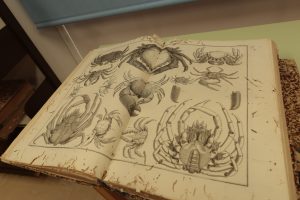
Among our most valuable items are a 1555 edition of Las Siete Partidas by Alfonso X the Wise; an Atlas marítimo de España by Vicente Tofiño (1789, two volumes), instrumentarium chirurgicum militare Austriacum by Giovanni Alessandro Brambilla, from the Royal Naval College of Surgery Library and a 1580 edition of Bartolus a Saxoferrato. We also hold historical journals such as El Siglo Médico (full text on RODIN: https://rodin.uca.es/handle/10498/11239) and Acta Eruditorum. Notably, a few years ago, we digitized the Guía Rosetty in collaboration with other local libraries. However, we believe more effort should be made to promote this valuable collection and ensure it receives the recognition it truly deserves.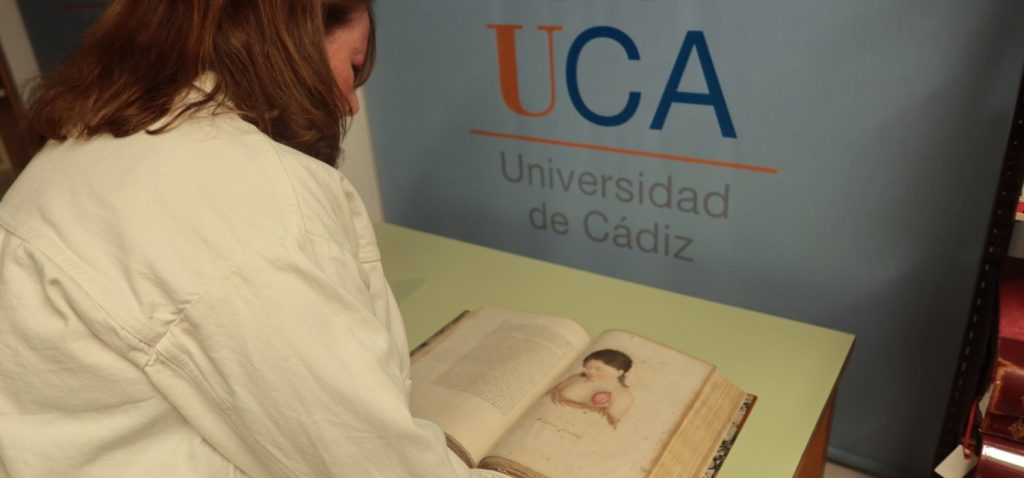 How has the concept of a university library evolved, transitioning from a traditionally closed space to one that is flexible and adapted to current academic needs, including real-time occupancy control systems?
J.F. University libraries are no longer just reading and study rooms—although this aspect remains necessary and highly in demand, especially during exam periods. Today, they are also spaces where courses are held in our Learning Areas, where students meet for group work or video conferences in Group Work Rooms, or where they can simply rest, read, relax, or collaborate. We strive to ensure they are comfortable and functional spaces, conducive to concentration and academic work, equipped with all necessary information resources and staffed by highly trained library professionals who are always ready to help. Beyond document management and lending, what additional services does the UCA Library currently offer?
L.F. In addition to access to electronic resources and the loan of physical and digital books, we also manage a laptop lending service with over 350 devices. These are offered in different formats—daily, biweekly, or annual loans—and are supported technically by the University’s IT Department.
C.F. Regarding user training, we provide a comprehensive training program that ranges from basic introductory courses to advanced workshops for final projects (TFG/TFM) and bibliographic management tools like Zotero and Mendeley. We also run targeted training sessions for doctoral students and faculty members, coordinated with the Doctoral Schools and the Teaching Innovation Unit.
What outreach activities does the UCA Library promote in terms of civic engagement, cultural dissemination, and internationalization?
J.F. The UCA Library actively promotes cultural and academic outreach. We organize thematic exhibitions, both physical and digital, to highlight our heritage and modern collections—often aligned with anniversaries, cultural events, or university initiatives. We also collaborate with other local libraries, institutions, and associations to develop literacy, reading, and cultural promotion programs. Our visibility is enhanced through social media, with an active presence on Facebook, Instagram, X (Twitter), and BlueSky. In terms of internationalization, we are involved in various European projects and library networks, which allow us to share best practices, enhance service quality, and position the UCA Library as a key player in the European Higher Education Area. Furthermore, many of our digital services are accessible worldwide, benefiting international students, visiting researchers, and alumni who remain connected to our university.
 J.F. Regarding internationalization, we organize our annual Erasmus Library Staff Week, with the support of the Vice-Rectorate for Internationalization. During this event, we welcome and spend a week with librarians from other countries, an experience of mutual enrichment that we highly value. What we consider cultural activities are framed within our program to promote books and reading, including initiatives such as the University Book Week, which each year is dedicated to a specific author, and the Welcome Book, published in coordination with the Vice-Rectorate for Culture and the University Publishing Service. We also run reading clubs and activities like Blind Date with a Book, as well as cultural collections on comics, science fiction, and crime novels. Moreover, we host exhibitions focused either on encouraging reading or on disseminating research outcomes. For these activities, we always collaborate with faculty experts in each field and offer our exhibition spaces to ensure there are always temporary displays, which adds further appeal for our users.
What initiatives have been developed in recent years within the framework of the new Open Science trend?
C.F. Our department falls under the Vice-Rectorate for Research and Knowledge Transfer, which allows us to work closely together to promote Open Science. This includes managing applications for APC funding (Article Processing Charges) to support open access publishing for our researchers. We are also responsible for the preservation and management of the UCA’s scientific output, openly deposited in the RODIN Institutional Repository, and for organizing events such as the Open Science Days, held annually in October as part of International Open Access Week.
Libraries are one of the university services with the most direct contact with a wide range of users—from researchers to casual visitors. Does this represent an additional challenge in the day-to-day functioning of the Library?
J.F. Above all, it is a great pleasure to see how libraries—an institution whose origins go back centuries—continue to evolve, remain in high demand, and offer essential services to the university community. And of course, it is also deeply rewarding to see how highly our users rate us in the annual surveys we conduct, both for our traditional services and for the more innovative ones we’ve discussed.