

UCA takes part in a new edition of the International Erasmus+ BIP Course on Marine Data Literacy 18 May 2026
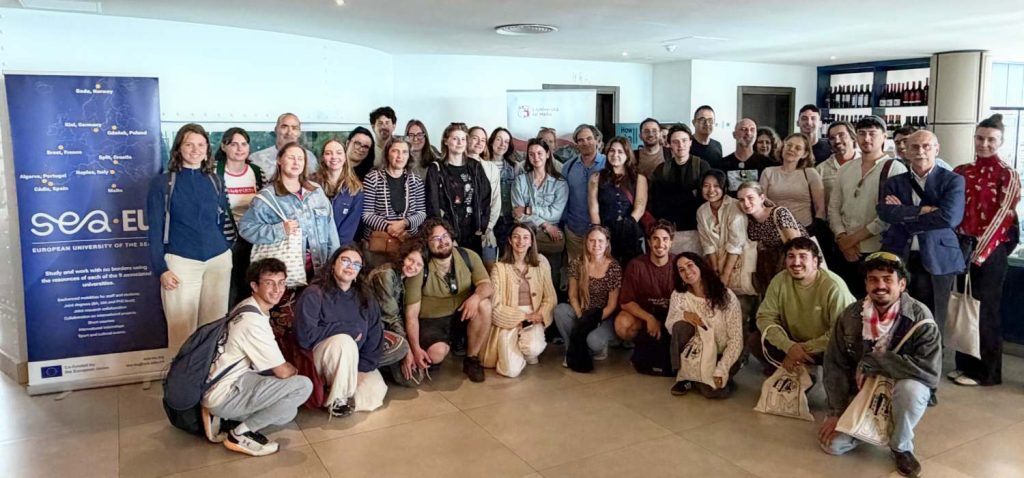
The programme, involving universities from the SEA-EU alliance, addresses a wide range of data types and information platforms, including marine observation and modelling systems
The University of Cádiz has participated in the fifth edition of the international Erasmus+ BIP (Blended Intensive Programme) course Marine Data Literacy, a training initiative included within the programme of activities of the European university alliance SEA-EU and focused on specialised education in the management and analysis of marine data. This edition brought together 14 lecturers from six European universities — Cádiz, Algarve, Malta, Gdansk, Kiel and Split — as well as a total of 36 students.
The course combines virtual and in-person learning through an intensive and collaborative model. Specifically, the programme was delivered through an initial virtual mobility phase held between 2 March and 2 April, consisting of 22 hours of online training distributed across different sessions. Last week, the in-person phase took place in Valletta (Malta), where students and lecturers participated in practical and theoretical sessions focused on the management, analysis and interpretation of data related to the marine and maritime environment.
The initiative responds to the growing need to train qualified professionals capable of addressing the challenges of a knowledge-based society that is increasingly linked to a sustainable relationship with the oceans. In this context, the course focuses on developing skills related to the efficient handling of marine data, whose volume and accessibility continue to increase thanks to technological advances and the implementation of international data management standards.
The programme covers a broad range of data types and information platforms, including marine observation and modelling systems, as well as the integration of different kinds of data, whether scientific, socio-economic or qualitative. Topics addressed include resource mapping, environmental monitoring, demography and performance indicators, in line with current research and innovation needs connected to blue growth and European marine sustainability policies.
One of the course’s most notable features is its strongly practical approach. The methodology combines theoretical explanations with real applications and examples directly linked to the marine and maritime environment, encouraging applied learning and collaborative work among students from different countries and academic disciplines. In addition to the virtual and in-person phases, students also complete an online project supervised by participating lecturers, based on both individual and group work.
The academic coordination of the programme is jointly managed by the partner universities through an international academic committee. The organisation of the intensive in-person week rotates annually among the participating institutions and, in the 2025/2026 edition, the University of Malta acted as host institution under the coordination of Professor Adam Gauci. The course also receives academic support from Professor Aldo Drago, who originally launched this educational initiative.
The participation of the University of Cádiz in this programme forms part of its involvement in international projects linked to teaching innovation, sustainability and marine knowledge, all strategic areas both for UCA and for the SEA-EU alliance. Activities of this kind also encourage international mobility among students and lecturers, promoting shared academic experiences and the creation of European collaboration networks focused on ocean-related challenges and the blue economy.
The Marine Data Literacy course represents a leading international educational initiative aimed at fostering new competences in the field of marine data, helping to prepare future generations of professionals and researchers to tackle the scientific, technological and environmental challenges associated with the ocean environment.