
Cookies Policy

The website of the University of Cádiz uses its own and third-party cookies to carry out analysis of use and measurement of traffic, as well as to allow the correct functioning in social networks, and in this way to improve your browsing experience.

If you want to configure cookies, press the button Customize Cookies. You can also access the cookie settings at any time from the corresponding link in the footer.

For more information about cookies you can consult the Cookies policy from the website of the University of Cádiz.

Cookies customization

The website of the University of Cádiz uses its own and third-party cookies to carry out analysis of use and measurement of traffic, as well as to allow the correct functioning in social networks, and in this way to improve your browsing experience.

For more information about cookies you can consult the Cookies policy from the website of the University of Cádiz. You can also access the cookie settings at any time from the corresponding link in the footer.

You can configure the website cookies according to their purpose:

  • Statistical analysis

    Third-party cookies (Google Analytics) are used on this site that allow the number of users to be quantified anonymously (personal data will never be obtained to identify the user) and thus be able to analyze the use made by users of our service, in order to improve the browsing experience and offer our content optimally.

  • Social networks

    Third-party cookies are used on this website that allow the proper functioning of some social networks (mainly YouTube and Twitter) without using any personal data of the user.

UniversidaddeCádiz
noticia

UCA researchers warn of the real danger of space debris for extraplanetary missions 24 March 2023
UCA researchers warn of the real danger of space debris for extraplanetary missions

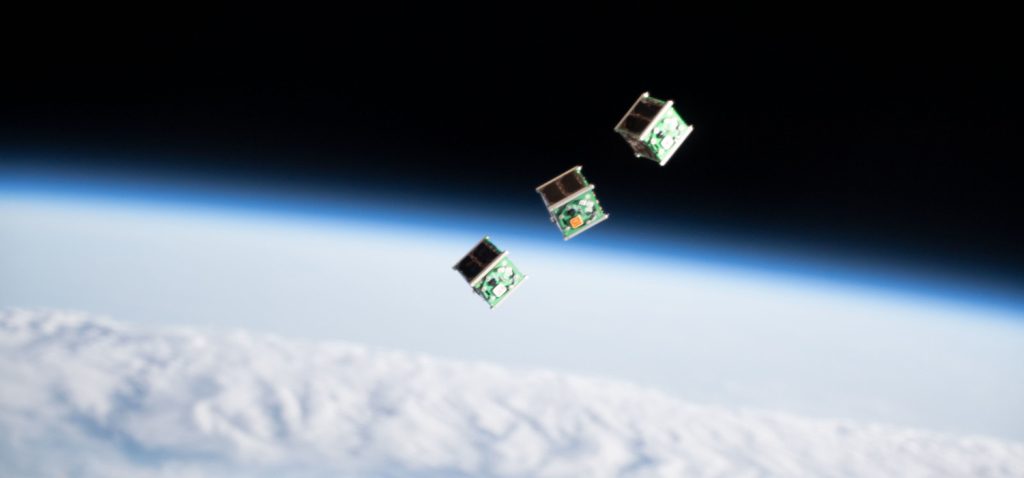
Isabel López and Alexander Franco, from the School of Engineering, have carried out a comparative study of the catastrophic failures that can affect two types of satellites

Researchers at the University of Cadiz, belonging to the Department of Engineering in Automation, Electronics, Architecture and Computer Networks and attached to the School of Engineering (ESI), have conducted a comparative study focused on the possible catastrophic failures, arising from radiation or collision with space debris, which may affect two types of satellites, specifically, the so-called cubesats and microsats.

This work, which has been published in the prestigious journal Scientific Reports – Nature, aims to analyze, on the one hand, the impact of micrometeoroids or space debris on the destruction of a satellite, and on the other hand, how cosmic rays, which are sources of ionizing radiation, affect these same devices; something that will serve to guide the design and operation of future spacecraft. “We have worked on quantifying the probability of catastrophic collision of space debris compared to catastrophic failure due to radiation effects for the same space satellite, orbit and mission duration. Our purpose is to discover whether the probability of catastrophic failure due to debris collision over the mission period is less than, equal to, or greater than the probability of catastrophic failure due to radiation effects,” as the researchers explain in the scientific publication.