

UCA Leads a Pioneering Microcredential in Climbing that Attracts International Students and Brings Together a Leading Teaching Team 27 February 2026
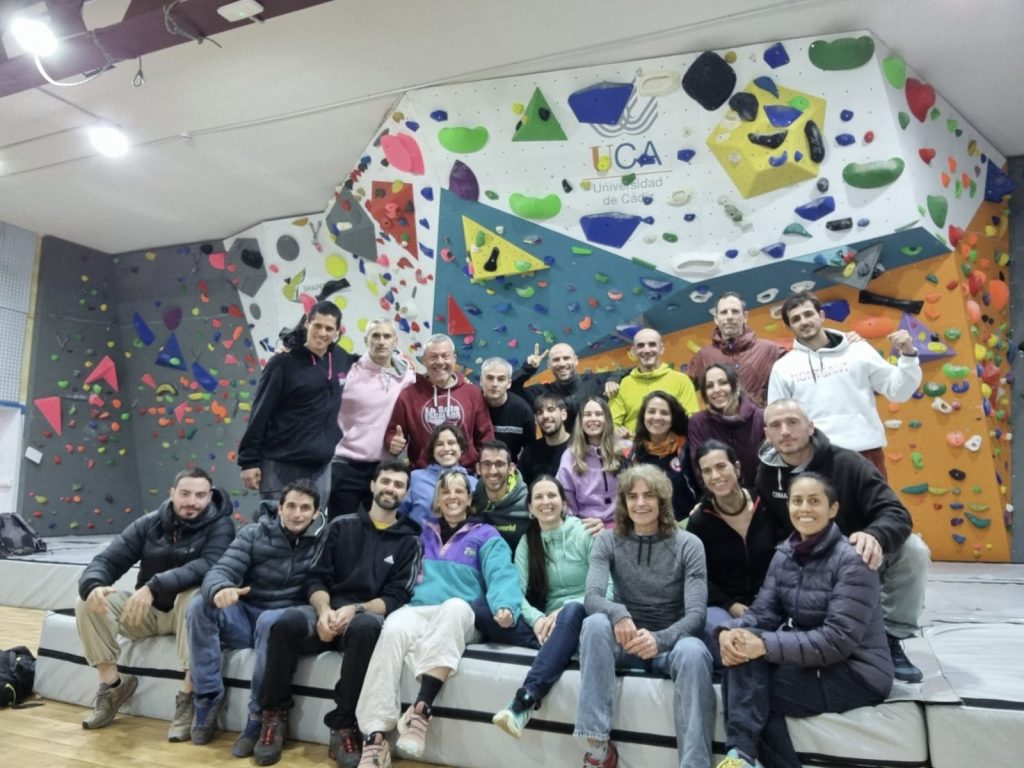
The University of Cádiz promotes a specialised programme in sports performance that concludes after six weeks of online training and four weeks of in-person sessions at the Puerto Real Campus.
The University of Cádiz, through the Fundación Universidad de Cádiz (FundUCA), is approaching the final stage of the microcredential “Climbing: An Interdisciplinary Approach to Sports Performance”, a pioneering initiative within the Spanish university system that connects science, training and health applied to climbing. The programme concludes on Thursday, 26 February, after several weeks of training.
Directed by Vanesa España, associate professor in the Department of Didactics of Physical, Plastic and Musical Education, the programme combines research, physiology and training methodologies with exercise medicine and performance psychology, adopting an approach focused on the practical application of knowledge in working with climbers.
The programme, worth 12.5 ECTS credits, has been structured into six weeks of online learning followed by four weeks of in-person sessions, the latter with a strong practical orientation. During this period, participants have worked on the direct application of course content, case study analysis and the integration of knowledge from different disciplines, recreating real professional intervention scenarios.
International participation and interdisciplinary learning
With 20 places available, the current edition has brought together a particularly diverse group in terms of both professional profiles and geographical origins. In addition to participants from several regions of Spain—including Andalusia, the Canary Islands, Castile and León, Catalonia and the Basque Country—the programme has attracted students from Qatar, Colombia, Chile, Argentina and Brazil.
This international dimension has encouraged professional and cultural exchange rarely seen in this type of specialised training. According to the programme director, the course has fostered a collaborative working environment characterised by active engagement and ongoing dialogue among participants, ranging from coaches and trainers to professionals in healthcare, psychology and sports science, reinforcing the interdisciplinary nature of the microcredential.
The training pathway has covered topics ranging from searching for and critically analysing scientific publications to climbing-specific physiological assessment, training planning, injury prevention and rehabilitation, and psychological training for performance, all from an integrated perspective aimed at professional practice.
A specialised teaching team
The teaching staff has been composed of academic and professional experts with recognised experience in their respective fields, including sports training, hand and upper-limb physiotherapy, exercise medicine and health, sports psychology and exercise physiology. This combination of expertise has enabled the programme to provide a comprehensive view of climbing performance, aligned with current demands in the sector.
The University of Cádiz frames this initiative within its strategic commitment to university microcredentials designed to respond to specific needs in the professional environment. With the completion of this first edition, the institution is already working on organising a second edition of the programme, following the strong interest it has generated both nationally and internationally.
The in-person phase has been held at the Faculty of Education Sciences of the University of Cádiz on the Puerto Real Campus, reinforcing the site as a key hub for training in physical activity and sport within the University of Cádiz.