

UCA Develops Intelligent System That Reduces Household Dependence on the Electricity Grid by Up to 36% 9 June 2026
The research, funded by the Regional Government of Andalusia, optimises the use of renewable energy sources and improves the energy efficiency of homes capable of generating their own electricity.
A research team from the University of Cádiz has developed an intelligent energy management system capable of controlling, in real time, the energy flows of homes that generate part of their own electricity and heat. The system has demonstrated the potential to reduce dependence on the conventional electricity grid by up to 36%.
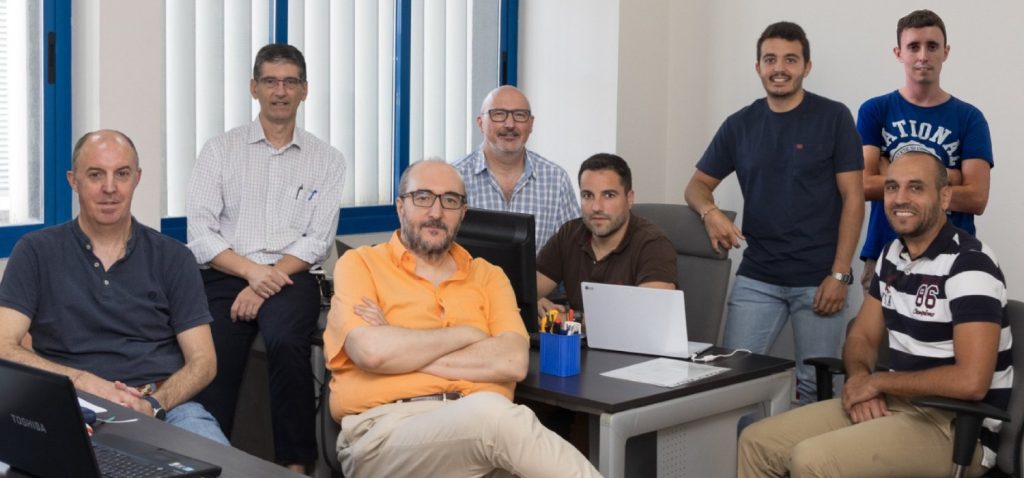
The project was funded by the Andalusian Regional Government’s Department of University, Research and Innovation and carried out by the University of Cádiz’s Sustainable and Renewable Electrical Technologies Research Group in collaboration with the University of Bayreuth (Germany) and Cardiff University (United Kingdom).
The technology is designed for so-called energy prosumers—users who not only consume energy but also generate it through their own installations. To operate effectively, a home must be equipped with photovoltaic solar panels, a battery energy storage system, an electric water heater and a gas boiler that serves as a backup source. The system developed by the University of Cádiz automatically coordinates all these components through an electronic device connected to the household’s Wi-Fi network.
Its operation is based on a control system capable of analysing, in real time, the availability of renewable energy, household electricity consumption, battery charge levels and thermal energy requirements. Using this information, it continuously adjusts the operation of the different devices to prioritise renewable energy sources and minimise reliance on grid electricity and conventional gas.
Laboratory tests have produced significant results. The system reduced dependence on the electricity grid by approximately 36% compared with similar installations lacking intelligent energy management. It also achieved a reduction of nearly 3% in gas boiler usage. According to University of Cádiz researcher Pablo Horrillo, co-author of the study, although these figures were obtained through simulations conducted over a 24-hour period, extending the results to a full year would represent substantial energy and economic savings.
The findings have been published in the scientific journal Energy and Buildings under the title Dynamic Real-Time Control for a Multi-Energy Prosumer with Electricity and Heat. The study presents a model based on different operating states that adapts the system’s response to changing energy conditions. When solar generation is high, the available energy is used to meet electricity demand, produce hot water and recharge the battery. During periods of lower renewable generation, the system automatically combines the available resources to ensure a reliable energy supply while maintaining household comfort.
The technology was validated through simulations covering a wide range of scenarios, including variations in solar radiation, changes in consumption patterns and different heating demands. Researchers complemented these tests with real-time laboratory experiments using physical equipment, allowing them to assess system performance under conditions closely resembling those of a real residential installation.
The results indicate that, in many situations, dependence on the electricity grid can be reduced to almost zero while maintaining an efficient balance between energy generation, storage and consumption. The research highlights the potential of intelligent energy management systems to accelerate the integration of renewable energy into residential environments and contribute to a more sustainable and resilient energy model.