
UCA and EGEDA to collaborate on training, research and employability in the audiovisual sector 24 November 2025
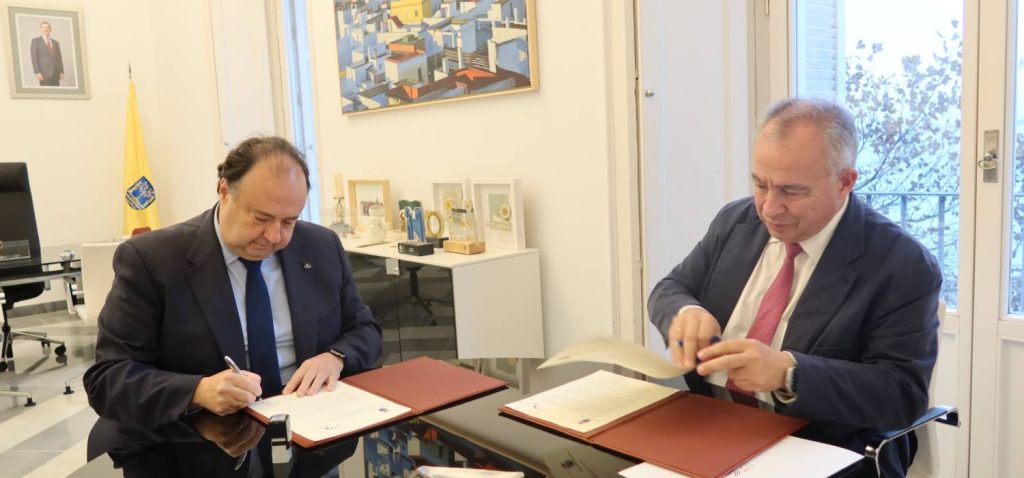
The agreement provides for the joint development of educational, cultural and entrepreneurship activities related to intellectual property and the audiovisual industry
The University of Cádiz and EGEDA, the audiovisual producers’ rights management entity, have signed a general collaboration agreement aimed at establishing a framework for cooperation that will support the development of training, cultural and research projects in the audiovisual sector and in the field of intellectual property.
The signing ceremony took place on Monday afternoon at the Rectorate, presided over by the UCA rector, Casimiro Mantell, and EGEDA’s Director of Business Development, Carlos Antón, representing both institutions.
This agreement lays the groundwork for the creation of specific agreements that will regulate joint actions between the University of Cádiz and EGEDA. In particular, it highlights the development of training and outreach programmes—both in-person and online—aimed at the university and professional communities, focusing on areas such as audiovisual production, intellectual property, content financing and the creative industries.
Among the initiatives envisaged are collaboration in educational programmes such as Platino Educa and Platino Training; the promotion of cultural entrepreneurship; access to funding mechanisms for projects led by students and graduates; improved employability in the sector through specialised platforms such as Platino Empleo; and the organisation of seminars, meetings and professional forums.
The agreement also opens the door to joint research initiatives, with a particular emphasis on emerging areas such as artificial intelligence applied to the audiovisual field, cultural sustainability, digital accessibility and the international circulation of Ibero-American works. Cultural and social activities of shared interest will also be promoted, including film forums, awareness campaigns and actions in support of diversity and intercultural dialogue.
Collaboration will be implemented through specific agreements, each of which will include a joint monitoring committee to ensure their development, evaluation and compliance. The protocol will have an initial duration of four years, renewable by agreement of both parties.
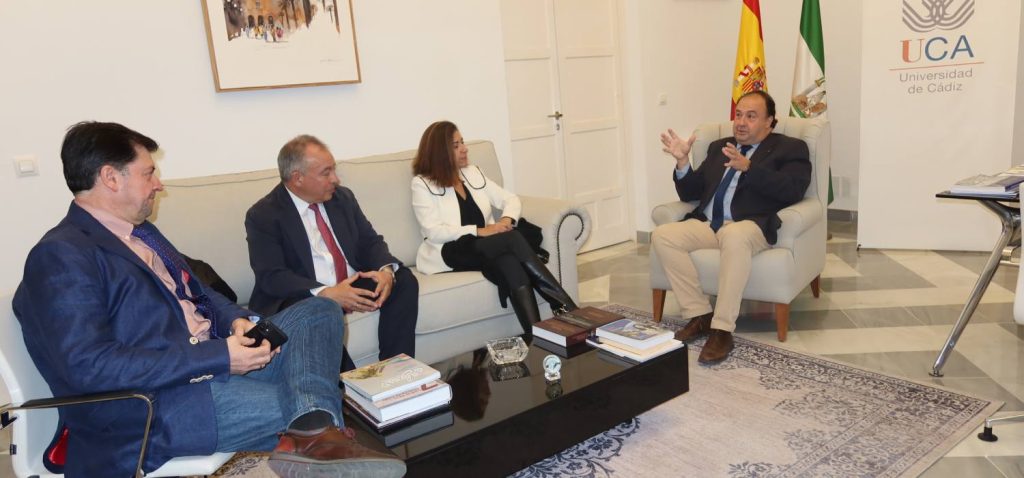
The signing ceremony was also attended by Cristina Benzal, representing the Platino Educa initiative, and José Antonio López, dean of the Faculty of Social and Communication Sciences. It is worth noting that this Faculty will host the new degree in Audiovisual and Digital Communication from the 2028/2029 academic year, making this agreement a step ahead in responding to the educational needs of future students.