

Two UCA Researchers Coordinate a Monograph on Clinical Linguistics Presented at the Instituto Cervantes 20 February 2026
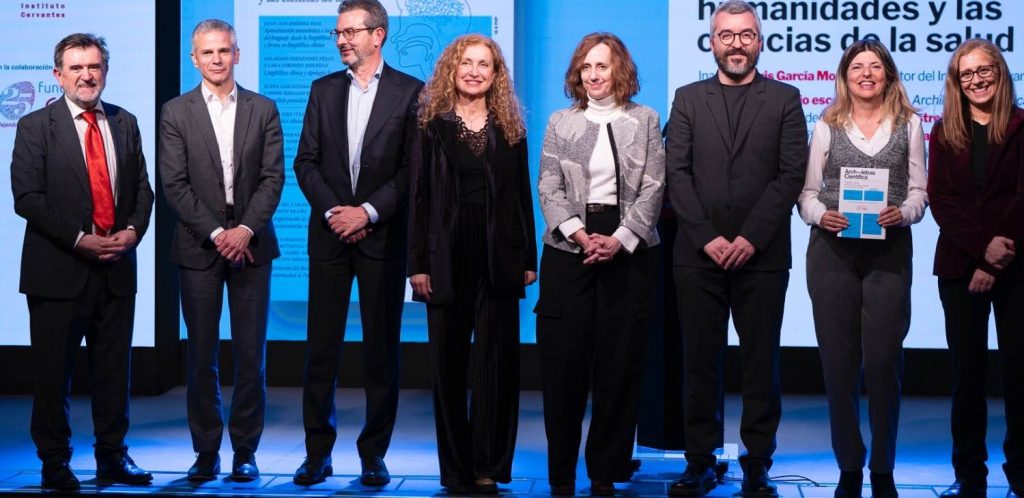
Researchers Carmen Varo and María Jesús Paredes, both affiliated with the Institute of Applied Linguistics (ILA) at the University of Cádiz (UCA), have coordinated a special issue on clinical linguistics published in the semi‑annual research journal Archiletras Científica. The volume, titled Clinical Linguistics: A Bridge Between the Humanities and Health Sciences, was officially presented at the Instituto Cervantes in Madrid.
The Institute of Applied Linguistics (ILA) conducts research on topics such as childhood language disorders and language in neurodegenerative diseases, as well as studies in related areas including forensic linguistics, language consultancy, and language industries.
The monograph underscores the role of language as an essential tool both for medical diagnosis and therapeutic intervention, highlighting clinical linguistics as a field of research with strong social impact that contributes to improving the quality of life for people with disabilities. This issue was developed in collaboration with the Lilly Foundation, an institution committed to strengthening Spanish as a language of science through the MEDES – Medicine in Spanish initiative.
During the presentation event, Carmen Noguero, Secretary General of the Instituto Cervantes, emphasised the importance of linguistic analysis not only as an academic subject but also as a form of intervention and care technology in healthcare contexts. She stressed that language is a decisive tool for understanding, diagnosing, and supporting patients in clinical environments.
Arsenio Escolar, editor of Archiletras Científica, highlighted the broad scope of the monograph, which ranges from theoretical and methodological foundations to practical applications related to automatic diagnosis and technological intervention.
The coordinators, Carmen Varo and María Jesús Paredes, pointed out the wide variety of topics covered in the issue, including reflections on epistemological bases, integration of aspects such as linguistic typology, prosody, and pragmatics as diagnostic tools, studies on neurodevelopmental disorders (such as autism and intellectual disability), narrative abilities in children with cochlear implants, and challenges in adulthood such as aphasia, bilingualism in Parkinson’s disease, and the automatic detection of cognitive decline.
José Antonio Sacristán, Director of the Lilly Foundation, explained that the foundation’s participation aligns with its core mission to promote Spanish scientific research and advance medicine, as well as to promote Spanish as a language for transmitting scientific knowledge.
In closing remarks, Estrella Montolío, co‑director of the journal, emphasised that clinical linguistics is a discipline aimed at social betterment with direct impact at different stages of the human life cycle. She noted the relevance of studies ranging from neurodevelopmental disorders to clinical applications in adult populations.
The event concluded with remarks by Javier Padilla, Spain’s Secretary of State for Health, who highlighted the central role of language in contemporary medical practice and called for stronger bridges between different areas of knowledge in an increasingly specialised scientific landscape.