

The University of Cádiz takes part in BIOACUMAR to study the impact of emerging contaminants on marine ecosystems 3 June 2026
Professor Laura Martín is part of the scientific team behind this national initiative, which will analyse how antibiotics and synthetic hormones accumulate and are transferred through marine species of ecological and commercial interest
Laura Martín, Professor in the Department of Physical Chemistry at the University of Cádiz, is participating in BIOACUMAR, a national research project that will investigate the presence and impact of emerging contaminants in marine ecosystems from an integrated environmental, animal and human health perspective. The project is led by the ARENA (Natural Resources Classroom) research group at the University of Oviedo and involves collaboration with the University of León and CIRCE (Conservation, Information and Research on Cetaceans).
Professor Martín is a specialist in marine ecotoxicology and environmental risk assessment, with extensive scientific experience in the study of pollution and its effects on marine organisms and ecosystems. Her research has focused particularly on environmental biomarkers, aquatic toxicology and environmental quality in coastal ecosystems, all of which are strategic areas within the BIOACUMAR project.
The initiative aims to investigate the presence of antibiotics, synthetic hormones and antimicrobial-resistant bacteria in marine ecosystems along the Asturian and Andalusian coasts. The objective is to understand how these compounds accumulate and move through marine food webs, as well as to assess the potential risks they may pose to ecosystems and food safety.
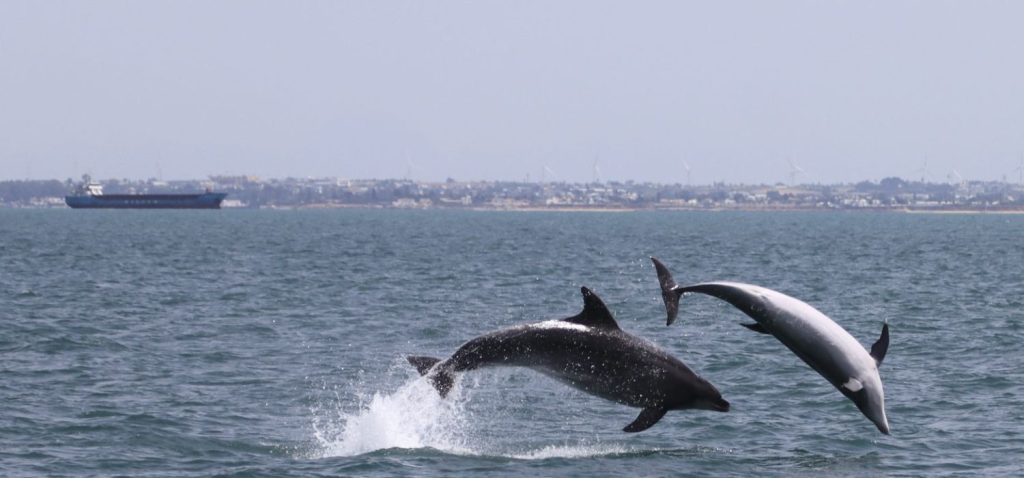
To achieve this, researchers will use bioindicator species of ecological and commercial importance, including wild and farmed European seabass, smooth-hound sharks and bottlenose dolphins, the latter being considered a key species for assessing the environmental status of marine ecosystems.
The research is being conducted under the One Health approach, a scientific framework that recognises the close interconnection between human, animal and environmental health. In this regard, the project’s principal investigators, Yaisel J. Borrell and Laura Miralles, from the University of Oviedo, have highlighted that the results will help assess “risks associated both with ecosystem health and with the food safety of fisheries and aquaculture products.”
In addition to measuring contamination levels, the project seeks to identify the potential sources of these pollutants in the marine environment by analysing the relationship between detected compounds, their geographical distribution and the predominant human, livestock and aquaculture activities associated with them.
BIOACUMAR is being developed with the support of the Biodiversity Foundation of the Spanish Ministry for Ecological Transition and Demographic Challenge through the Pleamar Programme and is co-funded by the European Maritime, Fisheries and Aquaculture Fund (EMFAF). The scientific consortium also includes the Centre for Research in Ecosystem Health and Wildlife (CREWH), together with collaborating organisations linked to fisheries, animal health and marine research. Additional institutions working in the fields of human and environmental health in both Andalusia and Asturias are expected to join the project during its implementation.
Fieldwork is already underway, including skin biopsy campaigns on bottlenose dolphins along the Andalusian coast and the collection of seabass and smooth-hound shark samples in Asturias. These activities will provide key information on the presence of emerging contaminants and their potential effects on marine ecosystems.
As part of the project’s outreach activities, a presentation event will be held on 24 June at the University of Cádiz, specifically in the Bolívar Hall of the Constitution 1812 Building. Representatives from the participating scientific institutions will take part, including Laura Martín on behalf of the University of Cádiz.
More information
https://www.crewh.org/es-bioacumar/
https://www.instagram.com/bioacumar
https://www.linkedin.com/company/bioacumar