

The University of Cádiz hosts the 89th Assembly of the National Conference of Deans of Faculties of Medicine 13 April 2026
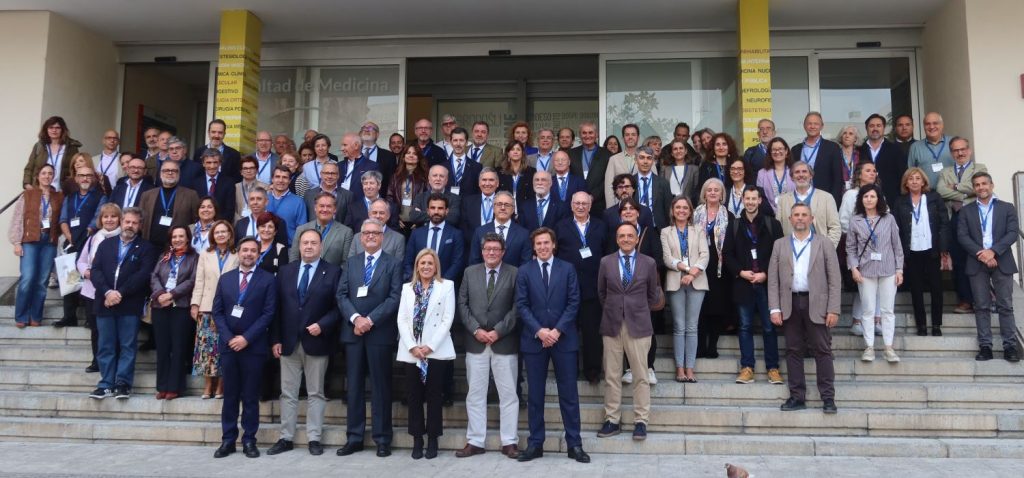
The meeting, held on 9 and 10 April, has brought together academic leaders from across Spain in Cádiz to address the main challenges in medical education
The Faculty of Medicine of the University of Cádiz has hosted this Thursday and Friday the 89th General Assembly of the National Conference of Deans of Faculties of Medicine in Spain (CNDFME), a leading academic forum bringing together senior representatives from these faculties to analyse and discuss the evolution of medical studies and the main challenges facing the university and healthcare systems.
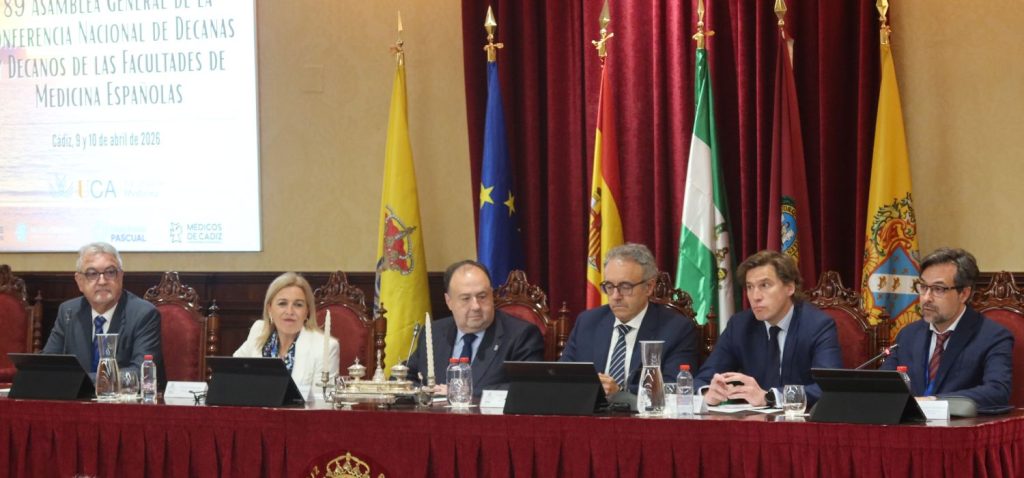
The opening session has been chaired by the Rector of the University of Cádiz, Casimiro Mantell, alongside Mario Martínez Escoriza, Director General for University Coordination of the Regional Government of Andalusia; Eva Pajares, Territorial Delegate for Health and Consumer Affairs of the Regional Government of Andalusia in Cádiz; Pablo Otero, Delegate for the Presidency and Institutional Relations of Cádiz City Council; Antonio Compañ, President of the National Conference of Deans of Medicine; and Manuel Rosety, Dean of the Faculty of Medicine at the University of Cádiz.
In his opening remarks, the Rector has thanked both the institutional representatives and the delegates from faculties of medicine across Spain for their attendance, and has highlighted the University of Cádiz’s commitment to health-related studies as one of its strategic priorities. He has also emphasised the importance of forums such as this one, which combine the traditional challenges of medicine with the latest scientific innovations.
For his part, the Director General for University Coordination has underlined the efforts made by both the administration and the university to connect academic education with clinical practice. In a similar vein, Eva Pajares has stressed that this close relationship between administration, academia and clinical practice has led to achievements such as the Institute of Research and Innovation in Biomedical Sciences of Cádiz (INiBICA). Representing Cádiz City Council, Pablo Otero has highlighted the value of the medical profession and expressed the city’s “pride” in hosting the participants of the Conference of Deans.
In his welcome address, the President of the Conference, Antonio Compañ, has stated that being in Cádiz, “where dignity was given to the surgical profession”, is a particularly meaningful experience for him. He has thanked the Faculty of Medicine for the work carried out in preparing the event and has highlighted Cádiz’s long-standing tradition as a host city for events related to the medical profession.
The Dean of the Faculty of Medicine, Manuel Rosety, has pointed out that Cádiz’s selection as host of the National Conference is not coincidental, but rather “a recognition of the trajectory of one of the most emblematic faculties of the University”. Hosting this Conference “represents strategic support for the University of Cádiz”.
Over the course of these two working days, the University of Cádiz has been placed at the centre of decision-making and debate on the future of the Medicine degree, including the implementation of new teaching methodologies, the integration of climate health into medical studies, improvements in doctor–patient communication, the development of the ECOE 2026 examination, and the necessary reform of access to the MIR system. The Dean of the Faculty of Medicine has highlighted that this event also provides an opportunity to showcase the Faculty’s academic progress to other institutions, “such as the institutional accreditation of its Quality Assurance System, the International Quality Seal for the Medicine Degree awarded by ANECA, advances in biomedical research linked to the recent accreditation of INiBICA, and the clinical simulation facilities available at the Faculty.”
Work programme
During the first working session, the newly incorporated faculties into the Conference have been presented, along with updates to the dean teams of several Spanish universities, including changes and re-elections at institutions such as the Complutense University of Madrid, the University of Oviedo, the University of Lleida, the University of Seville and the Autonomous University of Barcelona, among others. Proposals for the renewal of members of the Standing Committee have also been addressed, together with discussions on curricular adaptations in the Medicine degree and the definition of technical standards for the programme.
Thursday’s agenda has been completed with the presentation of reports from various working groups, including those focused on the preparation of the Objective Structured Clinical Examination (ECOE) 2026 and the progress made by the Medical Education Committee, with particular attention to the coordination and improvement of students’ practical training.
On Friday, the programme has continued with a second working session including several presentations and round tables addressing current issues in medical education. Topics discussed have included anti-fraud measures in the Medicine degree, the reform of access to the specialised healthcare training system (MIR), and the draft amendment to the Law on the Regulation of Healthcare Professions. These sessions have involved academic leaders and institutional representatives, such as the Director General for Professional Regulation, allowing for the incorporation of different perspectives into the debate.
The programme has also included a round table dedicated to reflecting on the university model, as well as contributions focused on the positioning of the medical profession and the current challenges in teaching within this field. In the afternoon session, topics such as the curricular integration of climate and health-related content, communication with patients in medical training, and the fundamental rights of healthcare professionals have been addressed.
In addition, the Assembly has included the presentation of the treasury report, the planning of future Conference meetings, and a final session for questions and discussion.
Manuel Rosety has stated that the meeting will facilitate collaboration agreements between faculties, “promoting the mobility of students and academic staff at a national level”. Following this meeting, the Faculty will become part of the Standing Committee of the National Conference of Deans of Medicine in the coming years.
By hosting this 89th edition, the University of Cádiz has become a meeting point for the academic community involved in medical education in Spain, reinforcing its commitment to teaching quality, educational innovation and institutional collaboration. The Dean of Medicine has emphasised that the event represents “an opportunity to demonstrate that Cádiz is, both historically and in the future, a leading academic reference.”