

Cookies Policy

The website of the University of Cádiz uses its own and third-party cookies to carry out analysis of use and measurement of traffic, as well as to allow the correct functioning in social networks, and in this way to improve your browsing experience.

If you want to configure cookies, press the button Customize Cookies. You can also access the cookie settings at any time from the corresponding link in the footer.

For more information about cookies you can consult the Cookies policy from the website of the University of Cádiz.

Cookies customization

The website of the University of Cádiz uses its own and third-party cookies to carry out analysis of use and measurement of traffic, as well as to allow the correct functioning in social networks, and in this way to improve your browsing experience.

For more information about cookies you can consult the Cookies policy from the website of the University of Cádiz. You can also access the cookie settings at any time from the corresponding link in the footer.

You can configure the website cookies according to their purpose:

  • Statistical analysis

    Third-party cookies (Google Analytics) are used on this site that allow the number of users to be quantified anonymously (personal data will never be obtained to identify the user) and thus be able to analyze the use made by users of our service, in order to improve the browsing experience and offer our content optimally.

  • Social networks

    Third-party cookies are used on this website that allow the proper functioning of some social networks (mainly YouTube and Twitter) without using any personal data of the user.

UniversidaddeCádiz
noticia

The UCA launches the Blue Carbon laboratory 30 December 2022
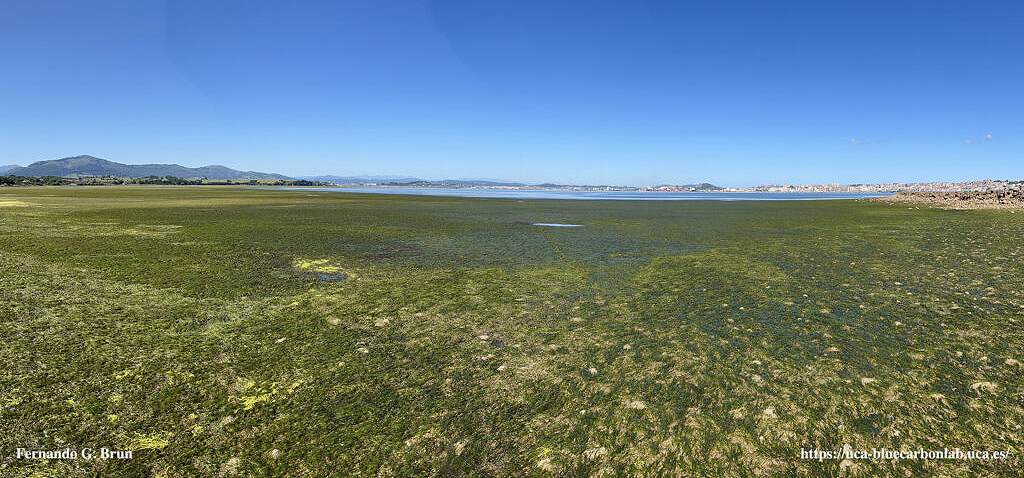
The UCA launches the Blue Carbon laboratory

Biology and Ecology researchers with more than 20 years of experience and studies share their knowledge on coastal ecosystems and the removal of CO2 from the atmosphere

The UCA-Blue Carbon Laboratory is made up of researchers from the University of Cadiz who have been working for more than two decades on the biology and ecology of two coastal blue carbon ecosystems: marine angiosperm meadows and tidal marshes. Their research and knowledge on the subject can be found on their website, where teachers, scientists and students share their progress on the net removal of CO2 from the atmosphere in marine ecosystems.

Specifically, in the marine environment, the reservoir (place of accumulation) of blue carbon is found in its sediment. With respect to land, as the UCA specialists say, carbon accumulation rates in the soil are up to 15 times higher in the case of marine ecosystems, accounting for more than 55% of the carbon buried annually in the biosphere.

More information