

“The social focus of the Faculty of Labour Sciences is not an add-on; it is the axis that structures both content and methodology” 19 January 2026
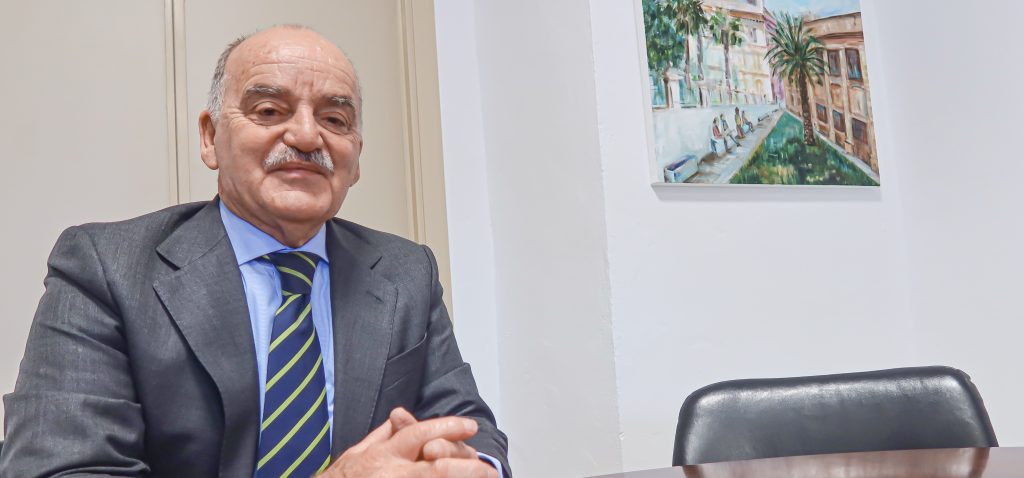
Ignacio de Cuevillas, Dean of the Faculty, analyses the challenges facing the centre and highlights its strong commitment to the socio-economic development of its surrounding environment.
At the end of last year, Ignacio de Cuevillas, Dean of the Faculty of Labour Sciences of Cádiz, received a tribute from the Association of Social Graduates of Cádiz and Ceuta. The event recognised not only De Cuevillas’ professional career, but also his commitment to teaching and to the social fabric of the province of Cádiz, fostering synergies between the university and institutions working to defend citizens’ rights. In this interview, De Cuevillas reflects on the present situation of the Faculty and its immediate and future challenges.
The Faculty of Labour Sciences has maintained a strong social focus in its academic offering since its origins. How is this commitment reflected in the different degree programmes and in the education students receive?
Indeed, our Faculty has had a strong social orientation in its academic offering from the very beginning, inherited from the Social Schools created in August 1925 to train professionals who would be true advocates for the world of work. The social focus of the Faculty of Labour Sciences is consistently reflected in the structure of its curricula, its teaching methodologies and the learning experiences offered to students. This social commitment is evident in the multidisciplinary combination of legal, sociological, psychological, economic and human resources management knowledge. This integration is embodied in subjects oriented towards social justice, equality and the protection of workers’ rights, such as Labour and Social Security Law, Protection of Labour Rights, Socio-labour Policies, Occupational Health and Risk Prevention, Sociology of Work, Work Psychology, Equality and Gender, and Human Resources Management and Leadership, among others. This approach allows students, on the one hand, to understand work as a human and social phenomenon, not merely an economic one, and, on the other, to develop a critical and socially informed understanding of employment.
From a methodological perspective, learning is closely linked to social reality, including real case studies on labour conflicts, inequality or job insecurity; seminars on emerging issues such as digitalisation, teleworking and green jobs; applied projects in companies and trade unions; and simulations of court proceedings or mediation sessions. Ultimately, the aim is to connect theory and practice in order to train professionals capable of intervening in the labour market with social awareness and sensitivity.
How is this training complemented outside the classroom?
Through practical learning experiences, particularly curricular placements in socially impactful settings, such as public employment services, human resources departments, mutual insurance companies and prevention services, trade unions and workers’ associations, and companies with corporate social responsibility programmes. It is also complemented by participation in round tables, workshops and conferences, which form part of academic life and foster critical thinking, bring students into contact with real social actors and allow them to debate issues such as social justice, labour rights, inclusion and sustainable employment. It should be stressed that the Faculty’s social focus is not an add-on; it is the axis that structures content, methodology and the overall university experience, with the aim of training professionals capable of understanding work in all its complexity and of contributing to the construction of fairer and more dignified labour relations.
If you had to highlight a specific contribution of Labour Sciences to the public debate on social justice and labour rights, what would it be, and how does the Faculty work to make it visible?
A key contribution is providing a comprehensive, evidence-based understanding of how working conditions affect quality of life, social cohesion and distributive justice. Labour Sciences achieve this by analysing employment from multiple perspectives: regulation, labour relations, health and wellbeing, labour markets, inequality and work organisation. This holistic approach helps underpin public debates that are often polarised or oversimplified. At the Faculty, we work to make this contribution visible through research, education, knowledge transfer and spaces for social dialogue. This is reflected in conferences and congresses open to the community, the publication of studies shared with institutions and social partners, collaboration with trade unions, companies and public administrations, technical reports, advisory support in negotiations, and the participation of teaching staff in public debates and institutional advisory roles.
This academic year has seen the launch of the new Master’s Degree in Community Research and Intervention for Transformation and Social Inclusion. How has it been received and which profiles are showing the greatest interest?
Indeed, this academic year marks the launch of this inter-university Master’s Degree in Community Research and Intervention for Transformation and Social Inclusion, jointly delivered with the Universities of Jaén and Almería. Despite being introduced within a relatively short timeframe, the programme has been well received by students. In our case, it represents a major step forward in offering a new, attractive and much-needed specialisation for students of the Bachelor’s Degree in Social Work, which is another key pillar of our Faculty in training professionals who work with the most disadvantaged and vulnerable members of society. These students, together with those from sociology and psychology backgrounds, are the profiles showing the greatest interest in this Master’s programme, which began this academic year.
The Master’s programme is delivered jointly with the Universities of Almería and Jaén, which holds academic coordination. What does working within a shared teaching model mean for the Faculty, and how is the adaptation to this inter-university structure progressing?
For us, it has involved a significant organisational change, but also a strategic opportunity. It enhances the prestige of our Faculty by collaborating with centres that share common goals and seek to promote a broader understanding of the social and labour environment, processes of inequality and the specific challenges faced by vulnerable populations in each province. On the one hand, students benefit from diverse and complementary perspectives on community work and social inclusion; on the other, it facilitates the creation of inter-university research networks, strengthening the institutional standing of our Faculty and, by extension, the University of Cádiz. It is a true academic milestone for us.
As for the adaptation process, it undoubtedly requires greater coordination and an initial additional effort—harmonising academic calendars, assessment systems, teaching staff and shared teaching tools—but it results in greater academic richness and a more comprehensive learning experience for students. I would also like to highlight the highly collaborative atmosphere among the three institutions and the excellent work carried out by the coordinators. I would like to take this opportunity to express my gratitude to my colleagues, Professors Juana Moreno Nieto and Paula Sepúlveda Navarrete.
The Faculty is located in a unique setting, facing La Caleta and serving as a gateway to the La Viña neighbourhood. How does this location influence the life of the Faculty and its relationship with the surrounding social and cultural environment?
Our Faculty is housed in a historic building that has served various purposes over time, notably as the Mint for several years during the French occupation, and is deeply embedded in the cultural, political and social tradition of the city of Cádiz. Its location is not merely geographical; it profoundly shapes the identity of the centre, its daily life and its relationship with the surrounding community. The Faculty maintains a close connection with neighbourhood life: students coexist with local residents; the Faculty organises cultural activities, seminars and conferences with the city as their backdrop; it takes part in local celebrations; and it collaborates with neighbourhood associations on social intervention projects. In this way, the Faculty reinforces its open, community-oriented and culturally integrated character. Academia and community go hand in hand.
In the coming months, work will progress on the Valcárcel building, which is expected to house the future Degree in Pharmacy. How is the Faculty approaching this process, and what opportunities does it open up for reorganising spaces and academic activity?
The potential location of the Degree in Pharmacy in the Valcárcel building will entail a significant structural change in the university environment and in the La Viña neighbourhood itself, as the project includes the creation of a large open space for community use. It will also involve the development of new shared spaces for teaching and academic events. However, it is clear that construction works will cause some disruption around our Faculty. For this reason, the Dean’s Office is in direct contact with the University’s Infrastructure and Prevention Service and with the company Tragsa, which is currently carrying out demolition works, in order to anticipate possible scenarios and minimise inconvenience during construction. We also hope that the project includes multi-storey parking facilities, as parking is a major issue for both students and staff.
You were recently named Emeritus Member of the Association of Social Graduates of Cádiz and Ceuta. What does this distinction mean to you personally and professionally?
First of all, it is both an honour and a responsibility to receive this distinction. On a personal level, it has special emotional value, as it represents a gesture of appreciation from all the members of this prestigious professional association. It is also confirmation that the work carried out over many years in leading the Faculty has left a mark. We should therefore look back with gratitude and pride, always bearing in mind, as my patron saint said, Ad maiorem Dei gloriam. Professionally, our collaboration with the Association is not merely a formal institutional relationship; it represents a genuine commitment to excellence, guided by all those colleagues who have steered this remarkable institution that is the Faculty of Labour Sciences.
The recognition highlighted your ability to build bridges between the university and professional groups. Why do you consider this collaboration essential for improving knowledge transfer and the university’s social impact?
It is a fundamental alliance, because linking academic training with professional reality ensures that our future social graduates are exceptionally well prepared for labour market challenges. This joint effort is carried out through continuous and specialised training, the facilitation of professional placements, shared teaching in postgraduate master’s programmes and career guidance activities. Ultimately, this collaboration—this perfect symbiosis between academia and the profession—benefits students and association members alike and strengthens the social and economic fabric of the province of Cádiz, ensuring a future of highly qualified professionals committed to the values of their profession.
During the ceremony, you stated that you decided to “change justice through teaching”. Could you expand on this idea and explain how it has shaped your academic career?
I spent ten years working within the national judiciary, applying theoretical knowledge to the concrete cases of everyday practice. However, judicial work, with its strict deadlines and heavy caseload, does not allow for in-depth reflection on legal knowledge, especially when combined with university teaching and postgraduate studies in criminology. These circumstances, together with personal reasons and the political and social context of my country, led me to take a leave of absence and return to Spain to pursue my doctorate. I joined the University of Cádiz in 1989, beginning my career in university teaching and research.
Academic work allows for more thoughtful analysis, discussion and reflection on the law. It offers greater intellectual freedom, making it possible to conduct research without the constraints of a judicial file, to explore topics of personal interest, to train future legal professionals and to pass on accumulated practical experience to students. Finally, in response to the second part of your question, although legal doctrine is not a formal source of law, it has immeasurable value as a source of legal knowledge. Jurists’ studies objectively explain legal norms, guide their interpretation and directly influence case law, as judges and magistrates often draw on legal scholarship to support their decisions, in addition to serving as a basis for legislative change.