

The School of Medicine hosts the IV Annual Symposium of the Spanish Adult Neurogenesis Network 28 November 2025
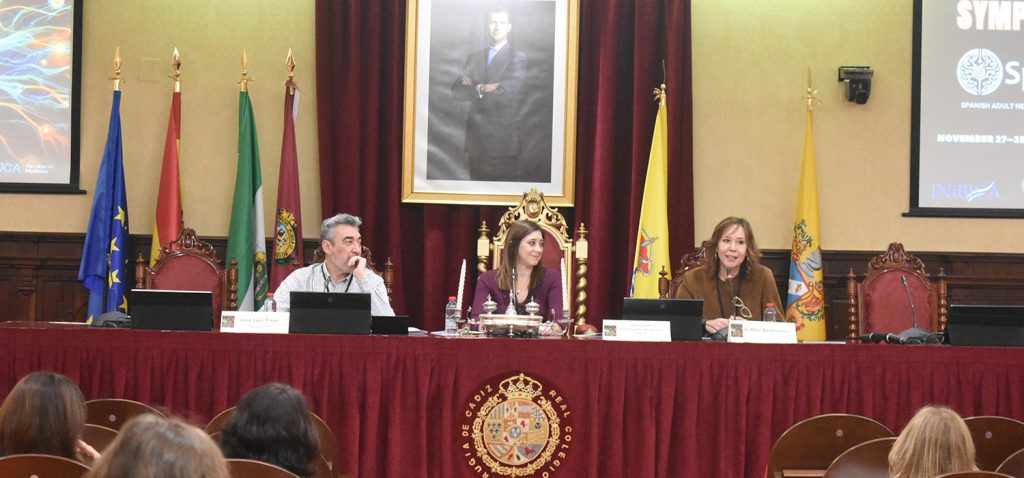
The event showcases research advances in a key discipline for understanding neurodegenerative diseases such as Alzheimer’s, ALS and Parkinson’s
The Spanish Adult Red Española de Neurogénesis Adulta has selected Cádiz, and specifically the School of Medicine at the University of Cádiz, to hold the fourth edition of its annual scientific symposium. The event, which brings together the members of RENA, spans two full working days and serves as a forum for presenting research results and upcoming scientific lines focused on adult neurogenesis.
Adult neurogenesis plays a crucial role in learning, mood regulation and the integration of newly formed neurons into existing neural circuits. It is also an essential area of study for gaining a deeper understanding of neurodegenerative disorders including Alzheimer’s, ALS and Parkinson’s, among others.
During Thursday and Friday, prominent specialists from across Spain, many of whom are internationally recognized, have shared insights on the present and future of this scientific discipline. The meeting also enables a high-level information exchange that has the potential to strengthen ongoing research, foster national cooperation, and generate new interdisciplinary collaborations. The symposium has received institutional support from the Consejo Social de la Universidad de Cádiz, the Vice-Rectorate for Research, the “Instituto de Investigación e Innovación Biomédica de Cádiz”, and INiBICA, among others.
Full Professor of Pharmacology at the Department of Neurosciences at UCA, Esther Berrocoso, stated that it is “a great pleasure for the School of Medicine, and for the University as a whole, to welcome this symposium on neurogenesis for very special reasons. We have a significant number of researchers working in biomedicine and neuroscience, and adult neurogenesis in particular has become a strong, thriving research area here. Cádiz currently has several high-level research groups, recognized nationally and internationally, making neurogenesis a key pillar of our scientific activity. This meeting provides an excellent opportunity to connect with other national research teams, establish future collaborations, and move forward together to strengthen and expand this area. All of this is further supported by the scientific infrastructure and institutional strength that INiBICA contributes to sustaining these studies.”
Researcher José Luis Trejo, senior scientist at the Instituto Cajal, part of the Centro Superior de Investigaciones Científicas, also spoke at the event, expressing that “it is a pleasure to be in Cádiz for this IV Symposium on Adult Neurogenesis. It is inspiring to witness the expansion of this scientific family. What began as a smaller gathering of 30 to 40 attendees has grown to nearly 80 experts discussing neurogenesis, one of the most important and promising functions of the human brain. Until 40 to 50 years ago, almost nothing was known about it, yet today it is helping us not only to understand how the brain works but also how it processes and interprets information. In the coming years, neurogenesis research is highly likely to become one of the most promising therapeutic tools for treating neurodegenerative diseases.”
Alongside keynote presentations, the symposium has featured a dedicated showcase of scientific panels and research posters, providing young and senior investigators with the opportunity to display studies addressing multiple perspectives of the field. These panels explore neurogenesis across functional, clinical, molecular and therapeutic dimensions, reinforcing the symposium’s role as a central scientific meeting point for high-impact research and knowledge transfer.
The meeting concluded with the opening of new avenues for cooperation between national neuroscientific institutions, consolidating Cádiz’s role as a strategic hub for adult neurogenesis research, and strengthening UCA’s academic profile in neuroscience, biomedicine and international scientific collaboration.