

Professor Esther Berrocoso Attends Audience with Her Majesty the Queen for the Spanish Brain Council 27 February 2026
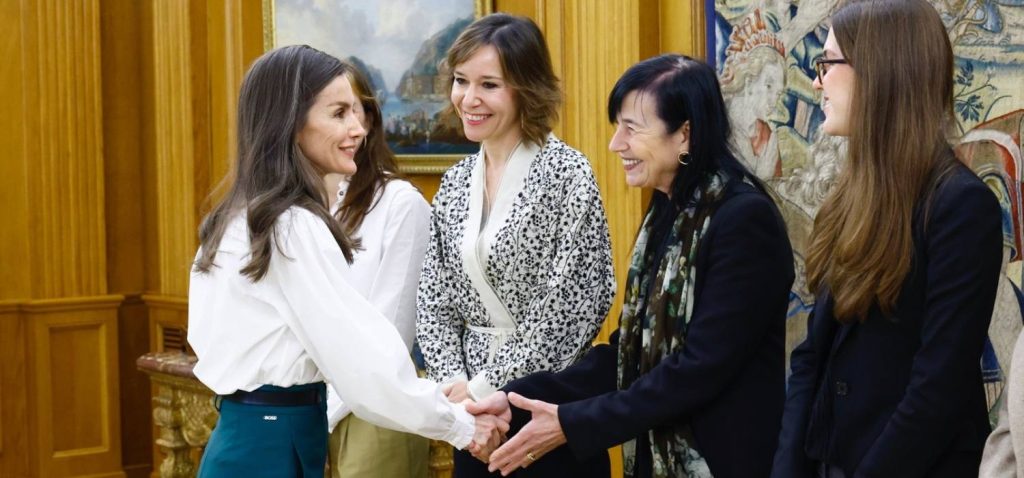
The UCA researcher was part of the delegation presenting recent advances and the first “Report on the State of Neuroscience in Spain” at La Zarzuela Palace.
Esther Berrocoso, professor at the University of Cádiz, took part in the delegation of the Spanish Brain Council received in audience by Her Majesty the Queen at La Zarzuela Palace. The meeting focused on presenting the latest initiatives and progress promoted by the council in the field of brain health.
Berrocoso attended the audience as part of the Spanish Brain Council delegation, alongside Mara Dierssen, President of the Council; Carmen Moreno Ruiz, Vice Secretary of the Spanish Society of Psychiatry and Mental Health; and the coordinators of the Youth Area of the Council, Clara Manso and Martina Lauriola.
Her participation highlights the contribution of the University of Cádiz in a strategic area for science and public health, namely neuroscience. Berrocoso is a professor at the UCA, affiliated with the Department of Neurosciences and the Institute for Biomedical Research and Innovation of Cádiz (INiBICA). Her research focuses on neuropsychopharmacology and psychobiology, with particular attention to pain, depression, and other neuropsychiatric disorders, as well as neurobiological mechanisms with potential clinical applications.
Throughout her career, she has maintained a strong research trajectory, producing significant scientific output, participating in competitive projects, and contributing to knowledge transfer, advancing biomedical research from the University of Cádiz.
During the audience, Berrocoso participated in the presentation of the first “Report on the State of Neuroscience in Spain”, a key recent milestone for the Spanish Brain Council. The report provides a comprehensive analysis of the neuroscience research ecosystem in Spain, covering the 2014–2024 period, and includes data on scientific output, impact, international collaboration, funding, and areas of specialization.
Berrocoso represents CIBERSAM – Biomedical Research Network in Mental Health within the Spanish Brain Council, reinforcing the presence of the University of Cádiz in leading scientific networks and structures dedicated to neuroscience and mental health research.
The audience also featured the launch of the Youth Area of the Spanish Brain Council, an initiative aimed at promoting training, participation, and social awareness about brain research and brain health, with a particular focus on younger generations.
The Spanish Brain Council brings together scientific societies, patient associations, and other stakeholders to advance brain research, address neurological pathologies, and raise public awareness of the importance of brain health.