

“Periférica Internacional” Awarded at the Andalucía Culture Awards 28 November 2025
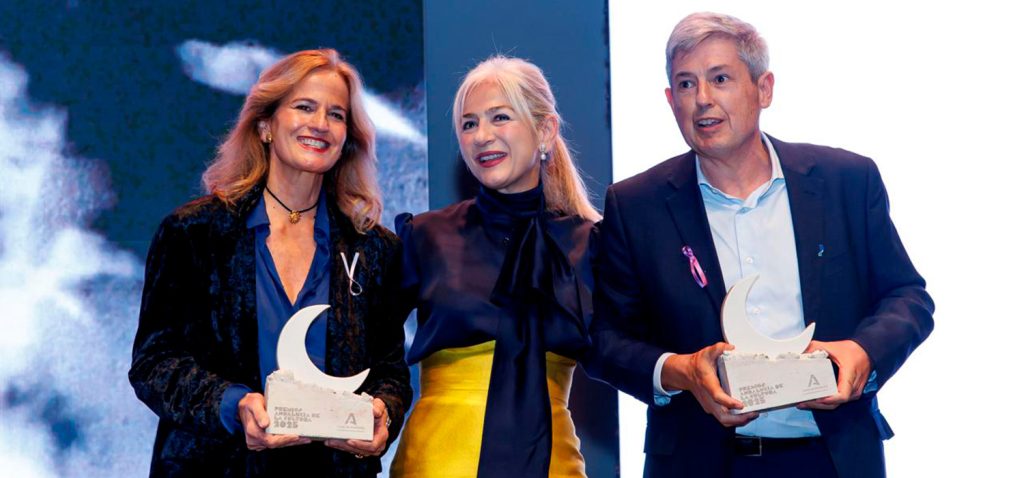
The journal edited by the University Extension Service of the University of Cádiz is recognized for its contribution to cultural thought and to the study of territorial dynamics
Periférica Internacional. Journal for the analysis of culture and territory, published by the University Extension Service from the Vice-Rectorate for Sustainability and Culture at the Universidad de Cádiz, has been honored in the category of Cultural Research at the first edition of the Andalucía Culture Awards, granted by the Consejería de Cultura y Deporte de la Junta de Andalucía. The distinction highlights the journal’s continuous and lasting contribution to cultural thinking and to the critical study of territorial dynamics through an interdisciplinary lens, backed by broad academic reach and impact.
The Vice-Rector for Academic Staff Affairs at UCA, José Antonio Perales, the director of the journal, Antonio Javier González, and several representatives from the editorial board attended the award ceremony, which took place at the Teatro Central. The event was presided over by the President of the Regional Government of Andalucía, Juan Manuel Moreno, and the Minister of Culture and Sport, Patricia del Pozo. There, they collected an award that acknowledges the track record of a publication with strong roots in Cádiz, devoted to analyzing, debating and reimagining the ties between culture and territory.
Since its launch in 2000, Periférica Internacional has grown into a reference publication in the fields of cultural policy analysis, territorial management and contemporary artistic practices. This recognition represents institutional support for a journal that has built its identity as a rigorous forum for reflection, open to academics, cultural professionals and creative agents from both national and international contexts. Its work embraces and amplifies a peripheral perspective that questions dominant models while creating new spaces for intercultural dialogue. With a deep commitment to internationalization and sustainability, the journal celebrated its 25th anniversary in 2024.
For the Universidad de Cádiz, this award reinforces its dedication to the creation and transfer of knowledge, as well as to editorial projects that stimulate cultural innovation, social cohesion and wider global visibility. The recognition also reflects the joint effort of the editorial team, advisory board and the wide network of contributors who, edition after edition, guarantee the publication’s academic excellence and public outreach.
Other award recipients in this edition
In the Visual Arts category, recognition was granted to Málaga artist Javier Calleja. In Film and Audiovisual Arts, the award went to Sevilla actress and director Paz Vega. The Literature category acknowledged Úbeda writer David Uclés. Fashion honored Córdoba designer Palomo Spain. Music recognized Granada violinist and composer María Dueñas.
In Flamenco, the award was presented to Jerez cantaora María Terremoto, and in Theater and Performing Arts recognition went to Jaén dancer and choreographer Mario Bermúdez. The Sponsorship and Patronage award was given to Fundación Alalá, an organization promoting art and culture for social integration, active in both Jerez and Seville.
In the Movable Heritage category, the award honored María Soledad Gil de los Reyes, for her role in the complete restoration of the Museo Arqueológico de Sevilla, ensuring the safe evacuation, custody and conservation of its collection. The Immovable Heritage award was granted to the Museo del Realismo Español Contemporáneo for the rehabilitation of the historic Santa María Magdalena hospital in Almería.
In Sacred Art, recognition was given to the Cofradía de Nuestro Padre Jesús Cautivo, María Santísima de la Trinidad Coronada y Glorioso Apóstol Santiago, while the jury awarded a special mention to the Asociación Gremial Sevillana del Arte Sacro for its work preserving traditional artisan trades linked to religious heritage.
The Heritage Municipality of Andalucía award was presented to the Ayuntamiento de Almonte for its protection of the town’s unique and diverse heritage, visible in the Parque Nacional de Doñana, as well as in ancient local traditions like the ‘Saca de las Yeguas’ and the prehistoric vestiges of Matalascañas.
The jury for this edition included leading Andalusian cultural figures such as Román Fernández‑Baca, painter Andrés García, conductor Lucas Macías, designer Moisés Nieto, academic Remedios Sánchez, director of the Festival de Málaga Juan Antonio Vigar, head of the Bienal de Flamenco Luis Ybarra and journalists Charo Ramos and Jesús Vigorra. The Ministry was represented by Patricia del Pozo, Deputy Minister Macarena O’Neill, Secretary for Cultural Innovation and Museums José Ángel Vélez and Secretary for Historic and Documentary Heritage Mar Sánchez Estrella. Jury secretary duties were held by Rosario García Victorio, with support from ministry representatives José Ángel Vélez and Mar Sánchez Estrella.