

International study confirms increasing storm intensity in the Strait of Gibraltar 19 May 2026
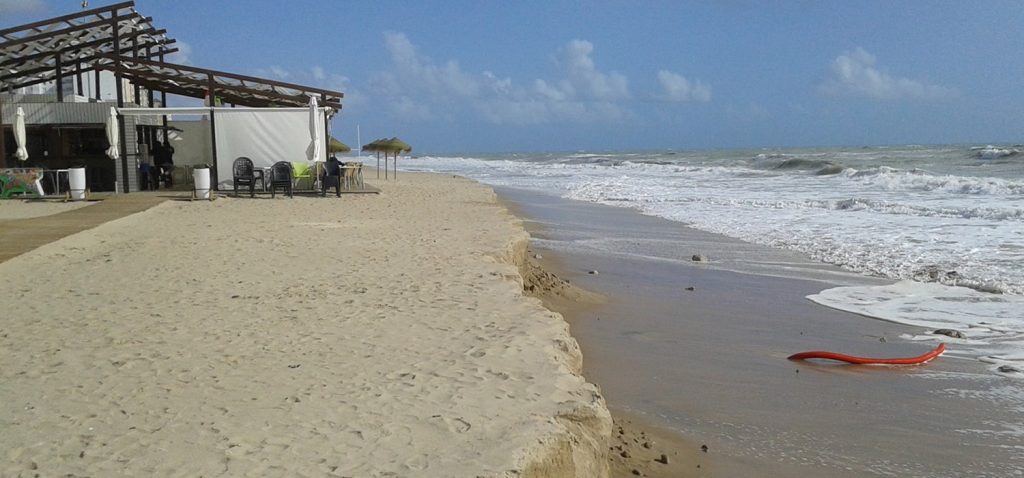
Researchers analysed four decades of data and warn of changes in storm behaviour, with implications for coastal management and climate change adaptation
The evolution of marine storms in the Strait of Gibraltar is no longer the same as it was four decades ago. This is confirmed by an international scientific study involving the University of Cádiz, which analysed storm behaviour between 1985 and 2024 and identified an increase in storm intensity, along with significant changes in their frequency and seasonality.
The study, published in the journal Estuarine, Coastal and Shelf Science, was carried out by a multidisciplinary team that included UCA researchers Rosa Molina and Giorgio Anfuso, from the Department of Earth Sciences at the Faculty of Marine and Environmental Sciences. Their contribution was particularly important in analysing the southern Iberian coastline, an especially complex area due to the interaction between the Atlantic Ocean and the Mediterranean Sea.
Using high-resolution wave data from eight coastal locations on both sides of the Strait, the research identified distinct patterns between the two basins. While the Atlantic experiences fewer but more energetic storms, the Mediterranean records a greater number of events, although with lower intensity. This contrast makes the Strait of Gibraltar a unique climate transition zone, where different marine dynamics converge and influence coastal evolution.
Beyond these structural differences, the study highlights a gradual transformation in storm patterns. In recent decades, researchers have observed an increase in storm energy in the Atlantic, particularly in exposed areas of the Gulf of Cádiz, as well as a higher recurrence of extreme events in the Mediterranean. In addition, the timing of these phenomena appears to be shifting, with peak activity increasingly occurring towards the end of winter and even into early spring, alongside the emergence of new cyclical patterns linked to large-scale atmospheric processes.
These changes have direct implications for the territory, as marine storms are among the main drivers of coastal erosion, flooding and damage to infrastructure located along the shoreline. Their growing intensity and variability reinforce the need to incorporate this knowledge into coastal planning and climate adaptation strategies, particularly in sensitive areas such as southern Iberia.
Reference: Scala, P.; Molina, R.; Manno, G.; Anfuso, G.; Ciraolo, G. (2026): Evolving storm regimes: Decadal trends and coastal risk at the Atlantic–Mediterranean boundary. Estuarine, Coastal and Shelf Science, 335, 109849.