

“INiBICA’s accreditation is a historic opportunity to transform the healthcare and scientific ecosystem of our region” 12 December 2025
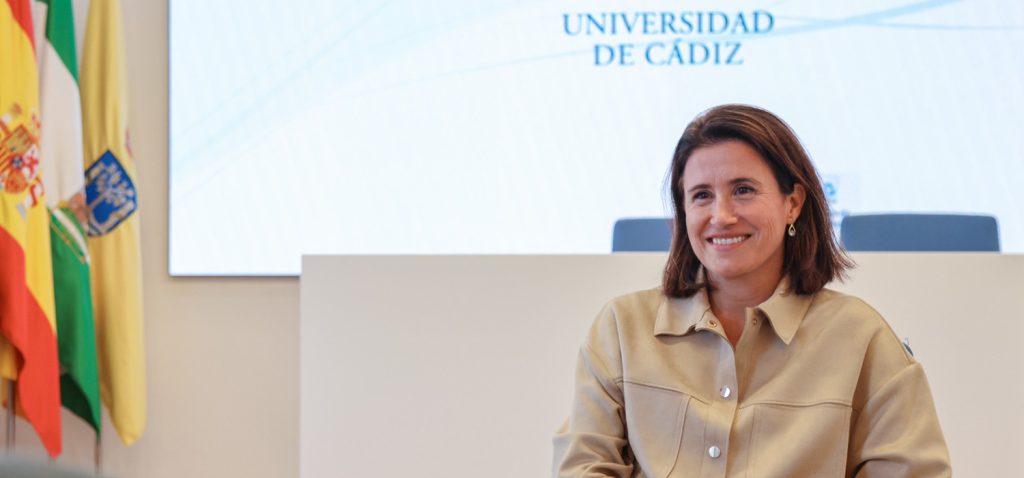
The recent accreditation of INiBICA as a Health Research Institute by the Carlos III Health Institute marks a turning point for the University of Cádiz and for the province as a whole. It not only recognises a level of scientific excellence comparable to the country’s leading research hubs, but also opens a decisive new phase for attracting talent, promoting cutting-edge clinical trials and bringing biomedical innovation closer to citizens. With this milestone, Cádiz becomes fully integrated into the national map of benchmark health research. To explore the true scope of this achievement, its impact on population health and the challenges ahead, we spoke with Isabel Benavente, Vice-Rector for Health Sciences and Wellbeing of the University Community.
What does INiBICA’s accreditation as a Health Research Institute by the Carlos III Health Institute mean for the University of Cádiz and for the province of Cádiz?
The accreditation represents a decisive qualitative leap and a recognition of enormous prestige. For the University of Cádiz, it consolidates our commitment to excellence in biomedical research and strengthens our role as a driving force for knowledge, innovation and social development. For the province of Cádiz, it constitutes official validation that the research conducted here meets the highest national standards. It positions us on the map of benchmark health research in Spain, increasing our capacity to attract talent, resources and high-impact projects. In short, it is a historic opportunity to transform the healthcare and scientific ecosystem of our region.
Will this accreditation have an impact on the quality and volume of biomedical research, clinical trials and the development of new therapies for the population of Cádiz?
Undoubtedly. Accreditation by the Carlos III Health Institute acts as a genuine scientific accelerator. It facilitates access to competitive national and international funding calls, which will translate into more research—with a greater number of projects, clinical trials and multicentre studies, and the capacity to lead them from Cádiz—and better research, as the level of rigour required by the accreditation ensures that projects are developed under the most advanced protocols and with a clear focus on real knowledge transfer. The final impact will directly benefit patients, who will gain earlier access to innovative diagnostics and cutting-edge therapies.
Much is said about the transfer of knowledge and the influence of INiBICA’s work on citizens, but this recognition may seem somewhat ‘remote’ to them. How do citizens benefit?
The benefit is very concrete and direct. It means that when a citizen of Cádiz enters a healthcare centre, they are often being treated by health professionals who are also leading researchers, applying the most up-to-date knowledge. They have access to innovative clinical trials and state-of-the-art treatments that are only available in accredited health research centres. The research carried out by INiBICA focuses on addressing the specific health problems of our population, shortening the time between scientific discovery and clinical application. In short, it guarantees first-class healthcare driven by local research.
How is the University of Cádiz addressing the challenge of translating INiBICA’s research results into real benefits for public health?
The approach is clear: joint work, transfer and real-world application. The University of Cádiz promotes collaborative environments in which basic and clinical researchers work in an integrated manner under the INiBICA umbrella, fostering interdisciplinarity and the transition from laboratory to hospital. In addition, we actively promote technology transfer, the creation of spin-offs, patents and the valorisation of research outcomes. Success is not measured solely in publications, but in impact: the number of clinical trials initiated, technologies licensed, changes to clinical guidelines or measurable improvements in patients’ quality of life.
How is collaboration between the University and healthcare centres structured in biomedical research and innovation?
Collaboration is structured precisely through INiBICA, which acts as a shared governance space between the University of Cádiz and healthcare institutions. This model integrates academic and clinical talent within a joint scientific policy, aimed at ensuring that advances are transferred swiftly and effectively to the healthcare system. The ultimate mission is clear: to generate useful knowledge that improves citizens’ health.
With the inclusion of Cádiz, all Andalusian research centres now hold recognition from the Carlos III Health Institute. Does this change the way they work together?
It completes a highly competitive and cohesive regional ecosystem. INiBICA’s incorporation into the Andalusian network of Health Research Institutes strengthens our capacity to develop large-scale multicentre projects, share patient cohorts, infrastructures and knowledge, and increase the international visibility of Andalusian biomedical research. Internal competition is transformed into strategic collaboration, generating synergies that benefit Andalusia as a whole and position it as a national and international benchmark.
Following this recognition, what is the next major challenge for INiBICA?
The key challenge now is to consolidate and project this accreditation. This involves strengthening indicators of scientific excellence, attracting and retaining talent, improving resource acquisition and enhancing our international profile. The accreditation report particularly highlighted the uniqueness and high potential of the Marine Resources-Based Health research line, an area in which we are a benchmark. Building on this asset and on the coordination provided by the SEA-EU European University alliance, we are promoting SEA-EU Health, an initiative that will foster collaboration, teaching and international mobility among Health Sciences degree programmes at our partner universities. This strategy will allow us to capitalise on our marine-linked identity while integrating the diverse expertise and health research infrastructure of the entire alliance.
What opportunities does this open up for undergraduate, master’s and doctoral students at the University of Cádiz who wish to pursue a career in biomedicine?
An extraordinary range of opportunities is opening up. Our students will have access to a training environment of academic and clinical excellence, with opportunities to participate in leading research groups, clinical trials, international projects and emerging technologies. The Institute acts as a genuine talent pipeline, offering solid training pathways and opportunities for incorporation through predoctoral and postdoctoral contracts. It is a privileged gateway to professional careers in biomedical research, university teaching, technological innovation or highly specialised clinical practice.
Is there any specific area of health in which INiBICA aims to play a leading role (ageing, chronic diseases, mental health, rare diseases, etc.)?
INiBICA structures its research around five scientific programmes focused on chronic and complex diseases, with prioritised lines:
- Neurosciences and Behaviour (P1): Focused on neurodegenerative diseases (Parkinson’s, Alzheimer’s), bipolar disorder and perinatal brain injury.
- Inflammation (P2): Addresses metabolic diseases (diabetes, obesity, gestational diabetes), HIV, chronic pain, silicosis and metabolomics.
- Onco-Haematology (P3): Centred on clinical trials for solid tumours (lung, breast, urological cancers) and haematological malignancies, innovative diagnostics (ovarian cancer) and mathematical models to prevent relapse in childhood leukaemia.
- Epidemiology and Public Health (P4): Researches quality of life and the impact of physical activity on obesity, mental health and oncology.
- Innovative and Emerging Therapies (P5): Develops advanced technologies such as 3D printing for surgical planning, cardiovascular cell regeneration, CAR-T therapies and 3D models for tumour research (glioblastomas).
In addition, there is the cross-cutting area of Marine Resources-Based Health, highlighted in the evaluation as a highly distinctive feature with enormous potential and impact.
On a personal note, as Vice-Rector for Health Sciences and Wellbeing of the University Community, what would you like to be able to say in ten years’ time about how INiBICA has changed the health of the population of Cádiz?
I would like to be able to say that, thanks to the joint work of INiBICA and the healthcare and university ecosystem, we have managed to reduce incidence rates or significantly improve quality of life and life expectancy in some of the most prevalent diseases in our province. That early diagnoses and personalised therapies developed here are already improving the lives of our citizens. And that, ultimately, the health of a citizen of Cádiz is objectively better today thanks to the consolidation of a research institute of excellence at the service of society.