

Faculty of Arts and Humanities at the University of Cádiz Launches Its Chess Club 27 February 2026
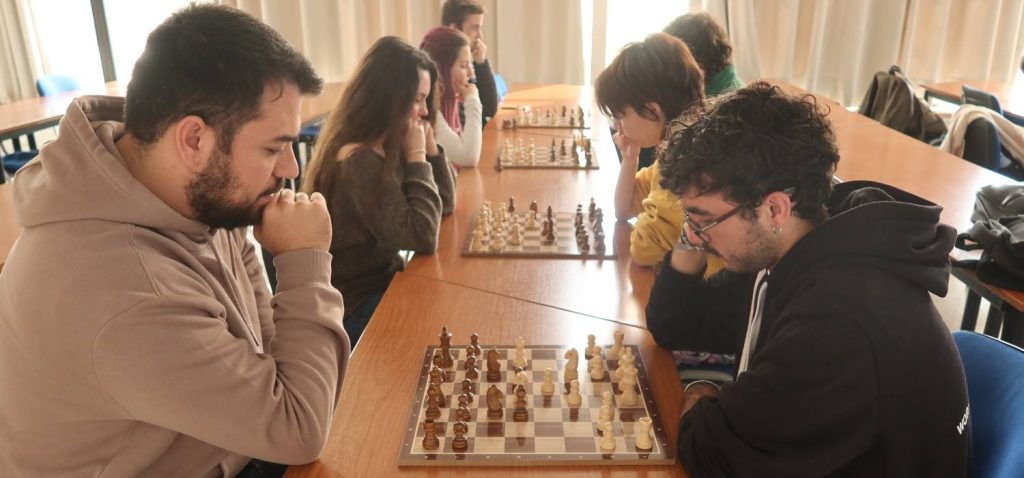
The presentation was attended by Vice-Rector for Students Nuria Campos, Vice-Dean Enrique Ruiz and the club’s coordinator Daniel Rodríguez.
The University of Cádiz hosted the official presentation on Wednesday of the Chess Club of the Faculty of Arts and Humanities, an initiative promoted by students themselves as part of the faculty’s strategy to strengthen campus life, student wellbeing and active participation through sport and healthy habits.
The event, held at the Faculty of Arts and Humanities of the University of Cádiz, was attended by Vice-Rector for Students Nuria Campos, Vice-Dean for Students, Culture and Employability Enrique Ruiz, and the Chess Club coordinator Daniel Rodríguez. All of them highlighted both the institutional support behind the initiative and the commitment shown by students in promoting this new activity.
During her remarks, Nuria Campos expressed her satisfaction with the launch of the club and emphasised the importance of student involvement in university associations and organisations. She noted that the activity has been organised by the students themselves, strengthening the sense of belonging and community building on campus. She also stressed the value of promoting initiatives that are accessible to students from all backgrounds and academic programmes.
For his part, Vice-Dean Enrique Ruiz underlined the educational value of sport as part of students’ comprehensive development, noting how activities of this kind help bring together students from different degree programmes and academic years. Ruiz placed the creation of the Chess Club within the broader strategy promoted by the Faculty’s Dean’s Office to encourage student wellbeing, coexistence and active participation in university life.
The launch of the club also represents the consolidation of a second major sports initiative within the faculty, following the introduction of futsal activities at the centre. The Faculty is currently hosting the second edition of its Futsal League, which has achieved high levels of student participation and engagement, becoming a key reference among the faculty’s sports initiatives.
Chess Club coordinator Daniel Rodríguez highlighted the educational and personal benefits of chess, describing it as an activity that promotes concentration and strategic thinking. In a context marked by immediacy and the fragmentation of attention often associated with the intensive use of social media, he explained, initiatives such as this provide a space for developing focus, reflection and in-person interaction in a collaborative environment.
The initiative is open to all students interested in chess, regardless of their previous experience or level, and aims to establish itself as a stable space for cultural and sporting engagement within the faculty. Further information about the Chess Club is available on the faculty’s website.