

ETSIA strengthens training in energy transition with a new Microcredential in Green Hydrogen 30 January 2026
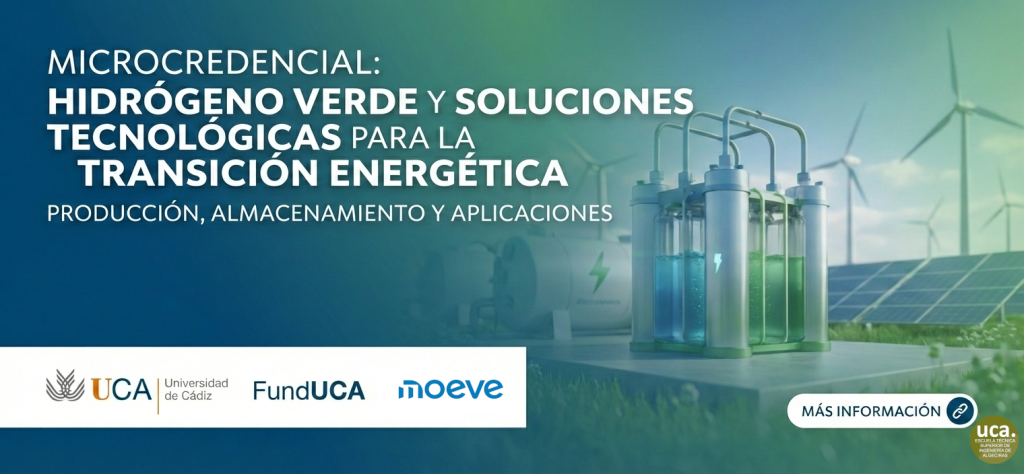
The University of Cádiz and the company Moeve promote this specialised 4 ECTS credit programme to meet the growing demand for professionals in a key sector for industrial decarbonisation
The Higher School of Engineering of Algeciras (ETSIA), part of the Bahía de Algeciras Campus of the University of Cádiz, takes a further step in its commitment to the energy transition with the launch of the Microcredential in Green Hydrogen, an academic initiative that places the University of Cádiz at the forefront of training in future energy technologies. The programme is directed by Professor José María Abelleira Pereira and is promoted by the University of Cádiz in collaboration with the company Moeve, which maintains an external Chair with the institution.
Under the title Green hydrogen and technological solutions for the energy transition: Production, Storage and Applications, this microcredential has been designed to respond to the growing demand for qualified professionals in a strategic field for industrial decarbonisation and sustainable development. The programme offers an official University of Cádiz certification worth 4 ECTS credits and is characterised by its flexibility and its clear orientation towards real labour market needs.
The academic programme is delivered by a teaching team that combines research excellence with industrial experience. Alongside UCA faculty, experts from prestigious institutions such as Moeve, the University of Huelva, the National Institute for Aerospace Technology (INTA) and Lean Hydrogen take part, ensuring a comprehensive and up-to-date perspective on the green hydrogen sector.
The microcredential is presented as an ideal opportunity both for those wishing to begin or deepen their knowledge in this technology and for those seeking a technical complement prior to enrolling in the Master’s Degree in Petrochemistry and Hydrogen Technologies. Throughout the course, participants acquire a comprehensive understanding of the hydrogen value chain, from the fundamentals of electrolysis and safe storage to its practical applications in mobility and power generation.
One of the programme’s distinguishing features is its strong practical focus. Participants will work with specialised software such as DWSIM, enabling them to model electrolysers, reversible fuel cells and to size key infrastructures such as hydrogen refuelling stations. In addition, the course includes a critical analysis of current regulatory and economic barriers, equipping future graduates with the tools to assess the real feasibility of green hydrogen projects.
The enrolment period will remain open until 5 February 2026 and must be completed through the FUNDUCA platform. The course will start on 12 February 2026 and will be delivered in synchronous online mode on Tuesdays and Thursdays, facilitating compatibility with professional activity. The tuition fee is €120, reduced from the initial €200 thanks to co-funding from the MicrocredUCA Plan.