

The Rector of the Universidad de Cádiz strengthens UCA’s leadership within the SEA-EU Alliance in Split 20 January 2026
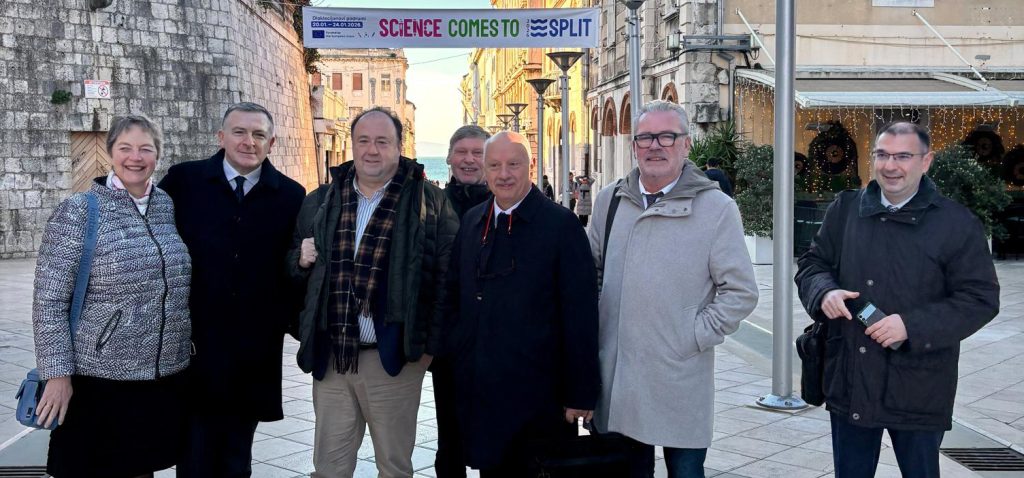
The meeting addressed joint degrees and the challenges of their future sustainability.
The Rector of the Universidad de Cádiz, Casimiro Mantell, took part this week in the meeting of rectors of the SEA-EU European University Alliance, held over two days in the city of Split (Croatia). This strategic gathering made it possible to advance the consortium’s main lines of work and to consolidate the alliance’s roadmap for its next phase of development.
The meeting began on Monday with the opening event of Science Comes to Town, a European initiative aimed at bringing science closer to the public and transforming cities into open spaces for knowledge, innovation and social engagement.
During the different working sessions, the rectors addressed key issues related to the SEA-EU Next project, including the definition of its mission, the next strategic steps and the current progress of the joint doctoral programme in Marine and Maritime Sciences and Technologies.
One of the central items on the agenda was the analysis of the Alliance’s joint degrees and their future sustainability. In this area, the Universidad de Cádiz, as the coordinating institution of SEA-EU, plays a particularly significant role by leading two strategic programmes: the Joint Master’s Degree in Port Management and Logistics (MIPMAL) and the Joint Bachelor’s Degree in Sustainable Blue Economy (SeaBluE). Both programmes already have first-year students who are currently studying in Cádiz and are fully integrated into UCA’s academic and university life.
The rectors also discussed the funding structure for upcoming student cohorts, the legal status of the SEA-EU association and the proposed Alliance membership fee for 2026, all of which are key elements in ensuring the long-term stability and projection of the project.
The participation of Rector Casimiro Mantell in this meeting reinforces the leadership of the Universidad de Cádiz within SEA-EU’s governance structures and highlights its commitment to the transformation of European higher education through the promotion of joint degrees, international academic cooperation and a university model that is increasingly open, innovative and closely connected to society.