

Cookies Policy

The website of the University of Cádiz uses its own and third-party cookies to carry out analysis of use and measurement of traffic, as well as to allow the correct functioning in social networks, and in this way to improve your browsing experience.

If you want to configure cookies, press the button Customize Cookies. You can also access the cookie settings at any time from the corresponding link in the footer.

For more information about cookies you can consult the Cookies policy from the website of the University of Cádiz.

Cookies customization

The website of the University of Cádiz uses its own and third-party cookies to carry out analysis of use and measurement of traffic, as well as to allow the correct functioning in social networks, and in this way to improve your browsing experience.

For more information about cookies you can consult the Cookies policy from the website of the University of Cádiz. You can also access the cookie settings at any time from the corresponding link in the footer.

You can configure the website cookies according to their purpose:

  • Statistical analysis

    Third-party cookies (Google Analytics) are used on this site that allow the number of users to be quantified anonymously (personal data will never be obtained to identify the user) and thus be able to analyze the use made by users of our service, in order to improve the browsing experience and offer our content optimally.

  • Social networks

    Third-party cookies are used on this website that allow the proper functioning of some social networks (mainly YouTube and Twitter) without using any personal data of the user.

UniversidaddeCádiz
evento

Aprendizaje de idiomas mediante la inmersión en Realidad Virtual usando vídeos de 360º 29 June 2018
Aprendizaje de idiomas mediante la inmersión en Realidad Virtual usando vídeos de 360º

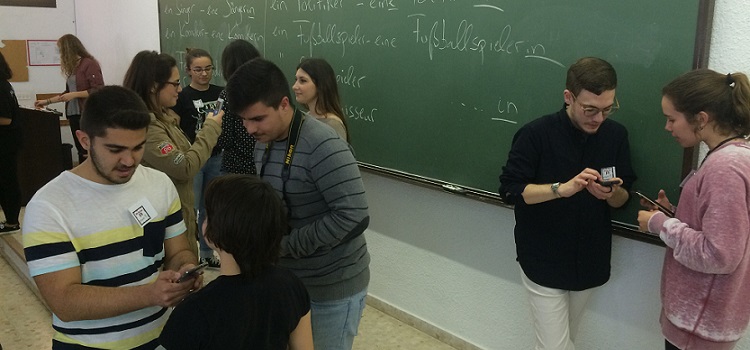
La Universidad de Cádiz presenta mañana, viernes 29 de junio, a las 10,30 horas y en el seminario FS14 de la ESI, la actuación avalada Aprendizaje de idiomas mediante la inmersión en Realidad Virtual usando videos de 360º. Esta ha tenido como objetivo el aprendizaje de una lengua extranjera haciendo uso de la realidad virtual mediante vídeos de 360º. El alumno interactúa con los vídeos 360º mediante la respuesta a preguntas breves. Las respuestas son analizadas e interpretadas, para mostrar nuevos vídeos o la repetición del mismo, consiguiendo de esta manera que el alumno practique de una manera fluida una determinada situación del mundo real. La aplicación ha sido creada usando la herramienta VEDILS (https://vedils.uca.es/) desarrollada por el grupo de investigación SPI-FM de la UCA.